

As an author, your website is your digital storefront, the central hub where readers, agents, and publishers can connect with you and your work. It's more than just an online business card; it’s a powerful marketing engine that works for you 24/7. A well-designed site establishes your brand, builds your email list, and directly sells your books, giving you control over your author career in a way social media platforms simply can't. Your visual presentation is a crucial part of this, establishing trust and a professional image. Beyond your site's design, consider generating professional AI headshots for authors to further elevate your brand presence.
But where do you start? The sheer number of options can be overwhelming. This guide cuts through the noise. We've compiled a curated list of the best platforms and template sources to find high-quality sample websites for authors. Each entry includes a strategic breakdown, screenshots, and direct links to help you visualize what's possible and make an informed choice. Whether you need a simple, elegant portfolio or a robust platform with e-commerce and event management, you'll find a solution here that fits your genre, technical skill, and budget. Let's explore the examples.
1. Sugar Pixels
For authors who want a professionally designed, high-performance website without managing multiple vendors, Sugar Pixels presents a compelling, all-in-one solution. As a full-service agency, they move beyond basic templates, offering a turnkey service that combines custom web design with integrated digital marketing strategy. This approach is ideal for authors who prefer to focus on writing, not on the technical complexities of building and maintaining an online platform.
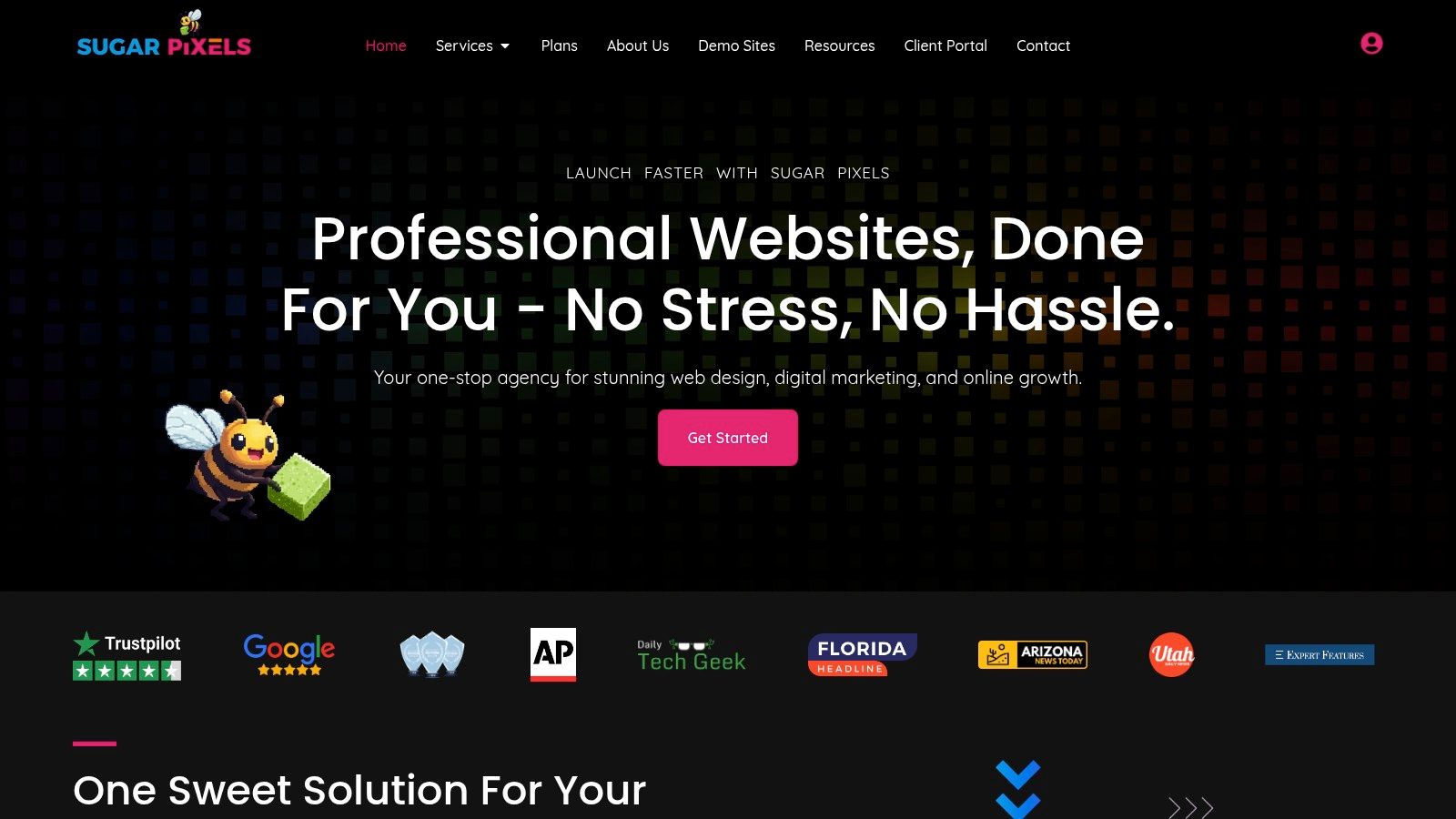
Sugar Pixels stands out by bundling everything an author needs under one roof: custom design, secure hosting, e-commerce for selling books and merchandise, SEO foundations, and even email marketing integration. Their streamlined process, from discovery to a typical 2-6 week launch, ensures a swift and focused build. For authors looking to grow a community or create a referral program, Sugar Pixels’ built-in affiliate program development is a unique and powerful feature not commonly found in standard web design packages.
Strategic Analysis: The Turnkey Advantage
An author's website needs to be more than just a digital business card; it's a central hub for audience engagement, book sales, and brand building. Sugar Pixels builds sites with this conversion-first mindset, ensuring every element-from the newsletter signup form to the book purchase page-is optimized to achieve a specific goal.
Their flexible pricing tiers cater to authors at every career stage. The "Lite & Sweet" plan (from $14.99/mo) is an accessible entry point for new authors, while the "Candy Cart Pro" ($99.99/mo) provides robust e-commerce capabilities for those with an established backlist and merchandise. This scalability means an author’s website can grow with their career without requiring a complete rebuild.
Actionable Takeaways & Key Features
For authors evaluating their options, Sugar Pixels offers a blend of professional quality and operational simplicity.
- Unified Service Delivery: Eliminates the headache of coordinating separate designers, developers, hosting providers, and marketers. This integrated approach ensures all parts of your digital presence work together seamlessly.
- Built for Growth: The tiered plans allow you to start with what you need and easily upgrade as your audience and sales grow. Higher-tier plans unlock valuable features like VIP support and unlimited product listings.
- Focus on Conversion: Every site is built with strategic goals in mind, such as growing a mailing list, driving pre-orders, or selling merchandise directly to readers. Their team provides guidance based on decades of combined experience.
- Affiliate Marketing Ready: A standout feature for entrepreneurial authors is the integrated affiliate program development, allowing you to create and manage a team of advocates to promote your work.
While the agency sets up sites with SEO best practices, it's important to remember that achieving high rankings requires ongoing effort. However, by providing a technically sound and strategically designed foundation, Sugar Pixels positions authors for long-term success.
Website: sugarpixels.com
2. Wix Website Templates – Literary/Author category
Wix stands out as a powerful platform for authors who need a professional website quickly, without a steep learning curve or coding knowledge. Its primary advantage is the vast collection of professionally designed templates specifically for the literary arts. These aren't generic templates; they are pre-built with the essential pages an author needs, like dedicated book showcases, event calendars, blog sections, and contact forms. This makes it an excellent source for sample websites for authors looking for inspiration and a fast track to launch.
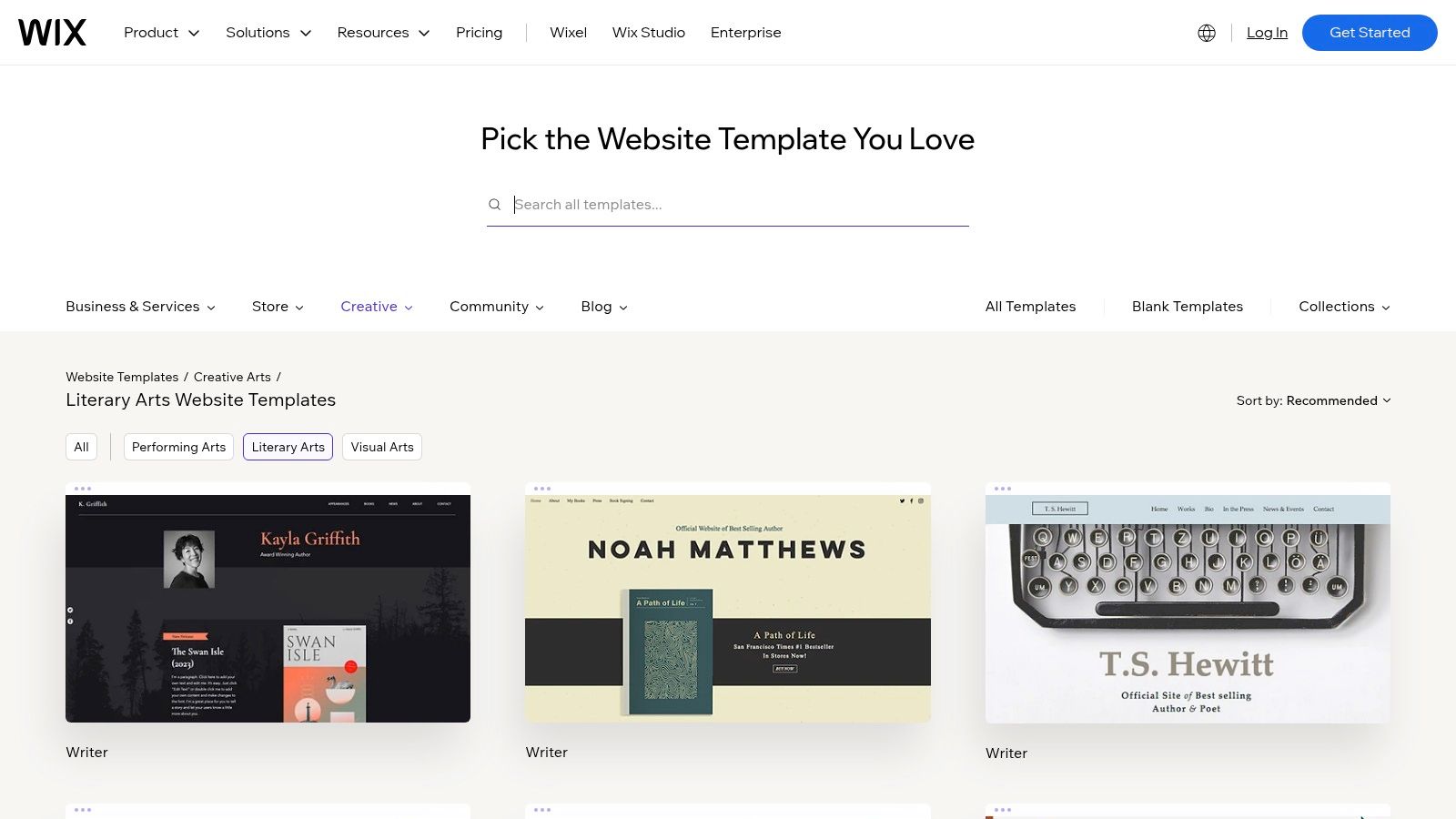
The user experience is centered around its intuitive drag-and-drop editor. Once you select a template, it opens directly in the editor, ready for you to add your book covers, author bio, and personal branding. This streamlined process significantly reduces the time from concept to a live site. Wix also integrates robust e-commerce and marketing tools, allowing authors to sell books directly to readers and build their mailing lists with ease.
Strategic Breakdown & Actionable Takeaways
What Makes It Stand Out:
- Speed and Simplicity: The ability to go from template selection to a fully customized site in just a few hours is a major benefit for busy authors.
- Author-Centric Design: Templates are built with an author's needs in mind, featuring large hero images for book covers and clear calls-to-action for newsletter sign-ups.
Key Insight: Wix is a fantastic starting point for authors who prioritize ease of use and speed over complex, custom functionality. The platform handles the technical backend, allowing you to focus purely on content and marketing.
Pricing and Access:
Wix operates on a freemium model. You can build and publish a site for free with Wix branding and a wix.com subdomain. Paid plans, which are necessary for a custom domain and removing ads, start at around $16 per month. E-commerce plans with payment processing capabilities begin at approximately $27 per month.
Pros & Cons:
| Pros | Cons |
|---|---|
| Quick to Launch: Templates open directly in the editor for fast customization. | Platform Lock-In: It is difficult to migrate your website design off of Wix. |
| Industry-Specific: Wide variety of templates designed specifically for writers and authors. | Learning Curve for Advanced Features: Customizing beyond the template requires learning Wix's specific tools. |
| All-in-One Solution: Includes hosting, e-commerce, blogging, and marketing tools. | Free Plan Limitations: The free version includes Wix ads and no custom domain. |
Explore Wix Website Templates at: https://www.wix.com/website/templates/html/creative-arts/literary-arts
For a deeper comparison of how it stacks up against other platforms, you can learn more about this versatile website builder for small business.
3. Squarespace Templates (and third-party author templates)
Squarespace is a premier choice for authors who prioritize sophisticated design and a seamless, all-in-one platform experience. It's known for its polished, designer-quality templates that give creators a stylish and professional online presence without needing to code. For authors seeking inspiration, the platform itself offers a curated collection of templates, while a thriving ecosystem of third-party designers provides specialized author templates, making it a rich source of sample websites for authors.
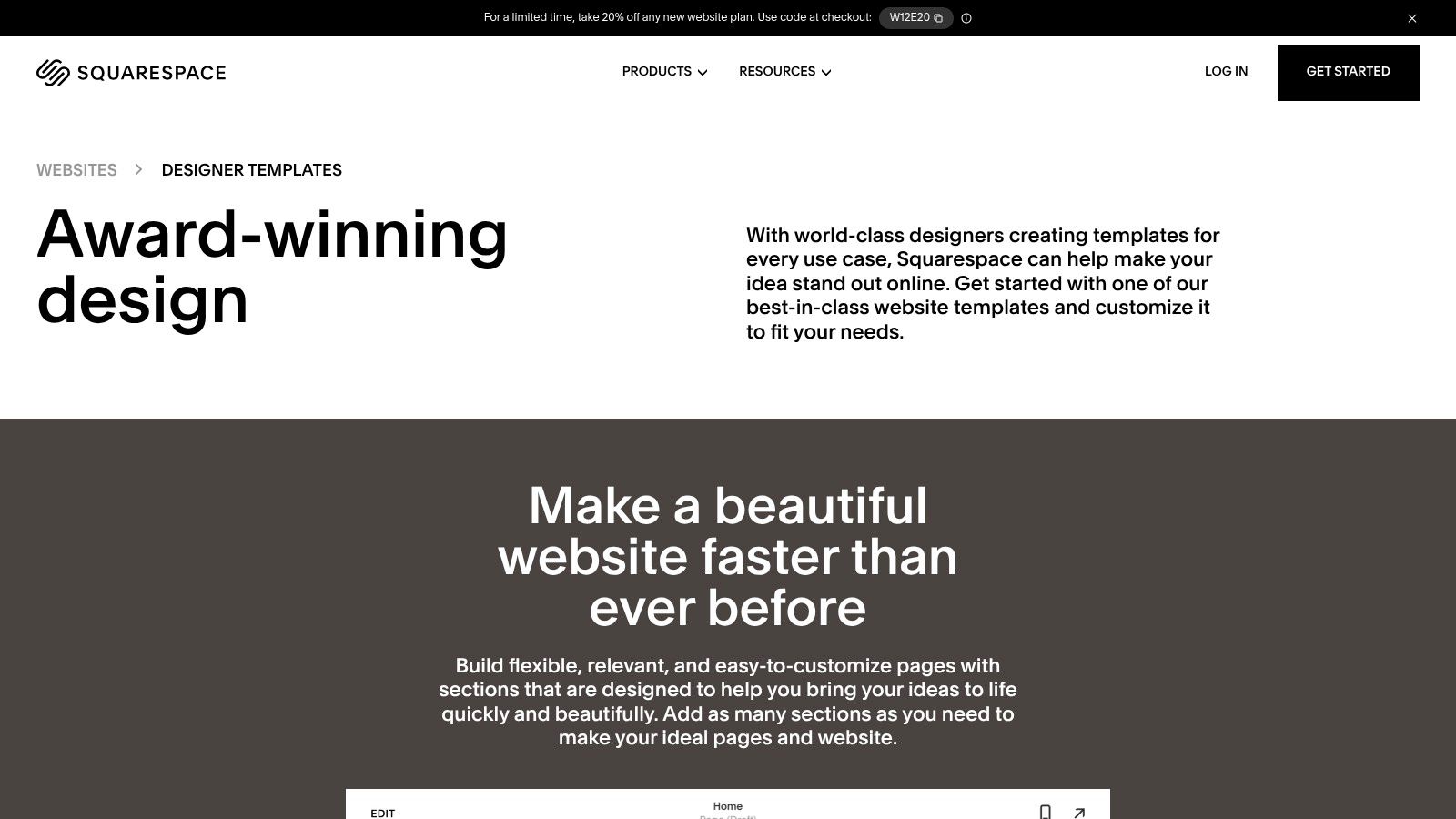
The platform’s user experience is powered by its modern grid-based editor, Fluid Engine, which offers a great balance of structured design and creative freedom. Squarespace integrates essential author tools directly into its system, including robust blogging capabilities, built-in e-commerce for selling books, and tools for building a newsletter audience. This unified approach simplifies website management by combining hosting, security, and core features into one predictable package.
Strategic Breakdown & Actionable Takeaways
What Makes It Stand Out:
- Design-Forward Approach: Squarespace templates are renowned for their clean, minimalist aesthetic and strong visual hierarchy, perfect for showcasing book covers and author branding.
- Third-Party Template Ecosystem: The availability of niche, premium author templates from third-party designers allows for even greater specialization and unique site designs.
Key Insight: Squarespace is ideal for authors who value brand aesthetics and want an integrated platform that handles the technical details. It provides a stable and secure foundation for building an elegant author hub that grows with their career.
Pricing and Access:
Squarespace does not offer a free plan, but it provides a 14-day free trial. Paid plans are required to launch a site. Personal plans start at around $16 per month (billed annually), which is suitable for most author portfolios. Business and e-commerce plans, which unlock features like payment processing and advanced analytics, start at approximately $23 per month.
Pros & Cons:
| Pros | Cons |
|---|---|
| High-Quality Design: Templates are professional, modern, and visually appealing. | No Free Plan: You must subscribe to a paid plan after the trial to go live. |
| Unified Platform: Hosting, domains, e-commerce, and blogging are all in one place. | Fewer Integrations: Limited app marketplace compared to platforms like WordPress. |
| Excellent SEO & Security: Strong built-in features for search optimization and security. | Editor Can Have a Learning Curve: The Fluid Engine editor may take some time to master. |
Explore Squarespace Website Templates at: https://www.squarespace.com/websites/designer-templates
4. WordPress.org Themes Directory (free author themes)
For authors seeking ultimate control and scalability, the self-hosted WordPress.org platform is an industry standard. Its official Themes Directory is a treasure trove of free themes, making it an essential resource for authors who want to see sample websites for authors built on a flexible, open-source foundation. Unlike all-in-one builders, WordPress.org gives you full ownership of your site and the freedom to choose your own hosting provider, allowing you to build a powerful author platform that can grow with your career.
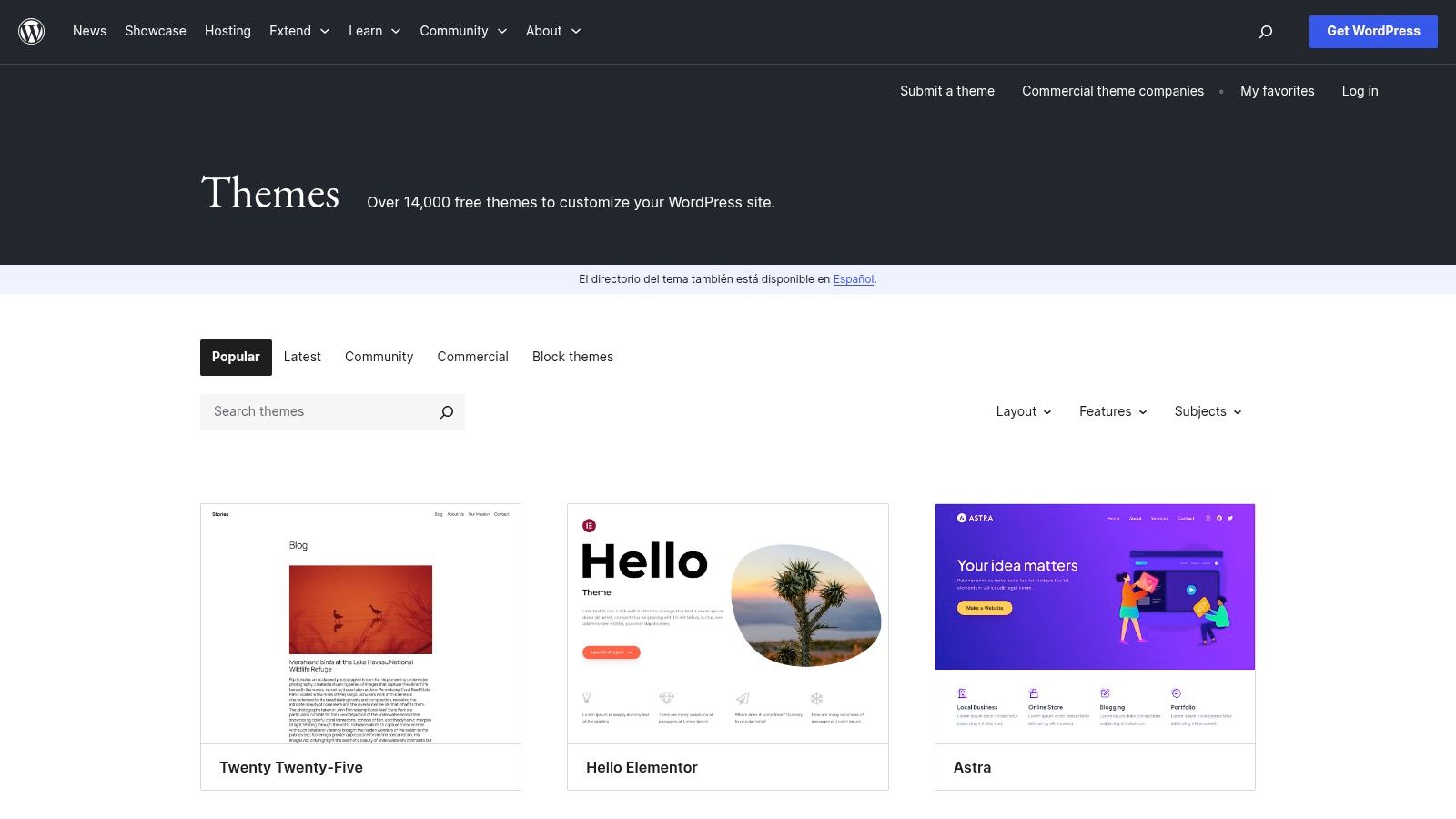
The primary advantage is the massive ecosystem of plugins that extend your site’s functionality far beyond a basic template. Authors can integrate powerful tools like WooCommerce to sell books directly, advanced SEO plugins to improve discoverability, and sophisticated email marketing platforms to build their audience. While it requires a more hands-on approach to setup and maintenance, the long-term flexibility and absence of platform lock-in are significant benefits for serious authors.
Strategic Breakdown & Actionable Takeaways
What Makes It Stand Out:
- Complete Ownership and Control: You own your website files and data, with the freedom to move to any hosting provider at any time. This is a critical distinction from closed platforms.
- Unmatched Extensibility: The vast library of free and premium plugins allows for nearly limitless customization, from creating a private fan community to running complex book pre-order campaigns.
Key Insight: WordPress.org is the ideal choice for authors with a long-term vision for their online presence. It demands more initial technical setup but provides an unparalleled level of control, customization, and scalability.
Pricing and Access:
The WordPress.org software and the themes in the official directory are free. However, you are responsible for purchasing a domain name (around $10-20/year) and a web hosting plan (starting from $3-15/month). This self-hosted model separates the software from the service, giving you control over your recurring costs.
Pros & Cons:
| Pros | Cons |
|---|---|
| No Template Cost: A large selection of high-quality author themes are available for free. | Requires Self-Hosting: You must manage your own hosting, security, and updates. |
| Full Control & Flexibility: The extensive plugin ecosystem allows for any desired feature. | Varying Theme Quality: It's crucial to check ratings, reviews, and last-updated dates to ensure quality. |
| Strong Community Support: A massive global community provides free support through forums. | Steeper Learning Curve: Requires more technical knowledge than drag-and-drop builders. |
Explore WordPress.org Themes at: https://wordpress.org/themes/
5. Webflow Templates Marketplace (author/book templates)
Webflow is a powerful platform for authors who desire a high degree of design control and professional polish without needing to write code. Its marketplace offers a curated selection of designer-grade templates, including options specifically built for authors and books. These templates provide a sophisticated starting point with pre-designed layouts for book showcases, author bios, event listings, and blogs, making it an excellent resource for those seeking advanced sample websites for authors.

The platform combines a visual, no-code designer with a robust Content Management System (CMS). This allows authors to manage their books, blog posts, and events as structured data, making site-wide updates seamless. While it has a steeper learning curve than simpler builders, it rewards users with unparalleled creative freedom, rich animations, and a pixel-perfect final product that stands out in a crowded market.
Strategic Breakdown & Actionable Takeaways
What Makes It Stand Out:
- Design Flexibility: Webflow offers near-limitless control over design elements, typography, and animations, allowing for truly custom and professional-grade visuals.
- Powerful CMS: The integrated CMS is perfect for managing dynamic content like a book portfolio or blog, making content updates easy without touching the design.
Key Insight: Webflow is the ideal choice for design-conscious authors who want a website that looks completely bespoke. It bridges the gap between simple template builders and custom-coded sites, offering the best of both worlds.
Pricing and Access:
Webflow offers a free plan to build and learn the platform, publishing to a webflow.io subdomain. To use a custom domain, paid Site Plans start at around $14 per month (billed annually). CMS plans, which are essential for most authors, begin at approximately $23 per month. Premium templates are a one-time purchase, typically ranging from $49 to $129.
Pros & Cons:
| Pros | Cons |
|---|---|
| Greater design control and professional-grade visuals: Achieve a premium, custom look. | Steeper learning curve: More complex than simple drag-and-drop editors. |
| Strong CMS structure: Easily manage books, blog posts, and events. | Higher Cost: Hosting and premium templates can be more expensive. |
| Clean, exportable code: Advanced plans allow you to export your site's code for self-hosting. | Requires more time investment: Customization takes more effort to master. |
Explore Webflow Templates Marketplace at: https://webflow.com/templates/
To get the most out of your Webflow site's marketing potential, you can learn more about how to build an effective mailing list.
6. ThemeForest (Envato Market) – Author/Writer themes and template kits
ThemeForest offers a vast marketplace for authors who want a highly specialized design foundation, primarily for WordPress. Unlike all-in-one builders, it provides premium themes and template kits created by independent developers specifically for writers, book launches, and author portfolios. This makes it a goldmine for finding unique sample websites for authors that go beyond standard templates, often including demo content that can be imported with a single click.
The platform is ideal for authors with some technical comfort or those working with a developer. You purchase a theme and then install it on your own self-hosted WordPress site. Many themes come bundled with powerful page builders like Elementor or WPBakery, allowing for drag-and-drop customization without needing to code. The key is to vet each product by checking its sales numbers, user ratings, and last-updated date to ensure quality and ongoing support from the developer.
Strategic Breakdown & Actionable Takeaways
What Makes It Stand Out:
- Specialized Features: Themes often include custom post types for books, events calendars, and advanced sections for showcasing series or author tours right out of the box.
- Design Variety: With hundreds of options, you can find a unique aesthetic that truly matches your genre and author brand, from minimalist poets to epic fantasy novelists.
Key Insight: ThemeForest is the best choice for authors building on WordPress who want a highly tailored, premium design without the cost of a fully custom-built site. The marketplace metrics provide social proof to help you choose a reliable and well-supported product.
Pricing and Access:
Themes on ThemeForest are a one-time purchase. Prices for author-specific WordPress themes typically range from $39 to $79. This fee usually includes the theme files, any bundled plugins, and six months of support from the theme's author, with an option to extend. Remember to factor in the additional costs of web hosting and a domain name.
Pros & Cons:
| Pros | Cons |
|---|---|
| Highly specialized designs for book launches and author branding. | Quality and support vary by seller; must check reviews and update history. |
| One-time payment for lifetime use of the theme. | Requires a self-hosted WordPress site, adding a technical step. |
| Many items include ongoing updates and direct author support. | Some themes rely on third-party page builders, adding complexity. |
Explore ThemeForest Author Themes at: https://themeforest.net/category/wordpress/entertainment/book-author
7. Guided Web Design – Affordable Squarespace author templates
Guided Web Design offers a unique and highly practical solution for authors who love the polish of Squarespace but want a more guided and affordable entry point than starting from scratch. They specialize in creating and selling pre-installed Squarespace templates designed specifically for authors' needs. This service bridges the gap between a fully DIY website and an expensive custom design, providing a structured yet customizable foundation for a professional online presence.
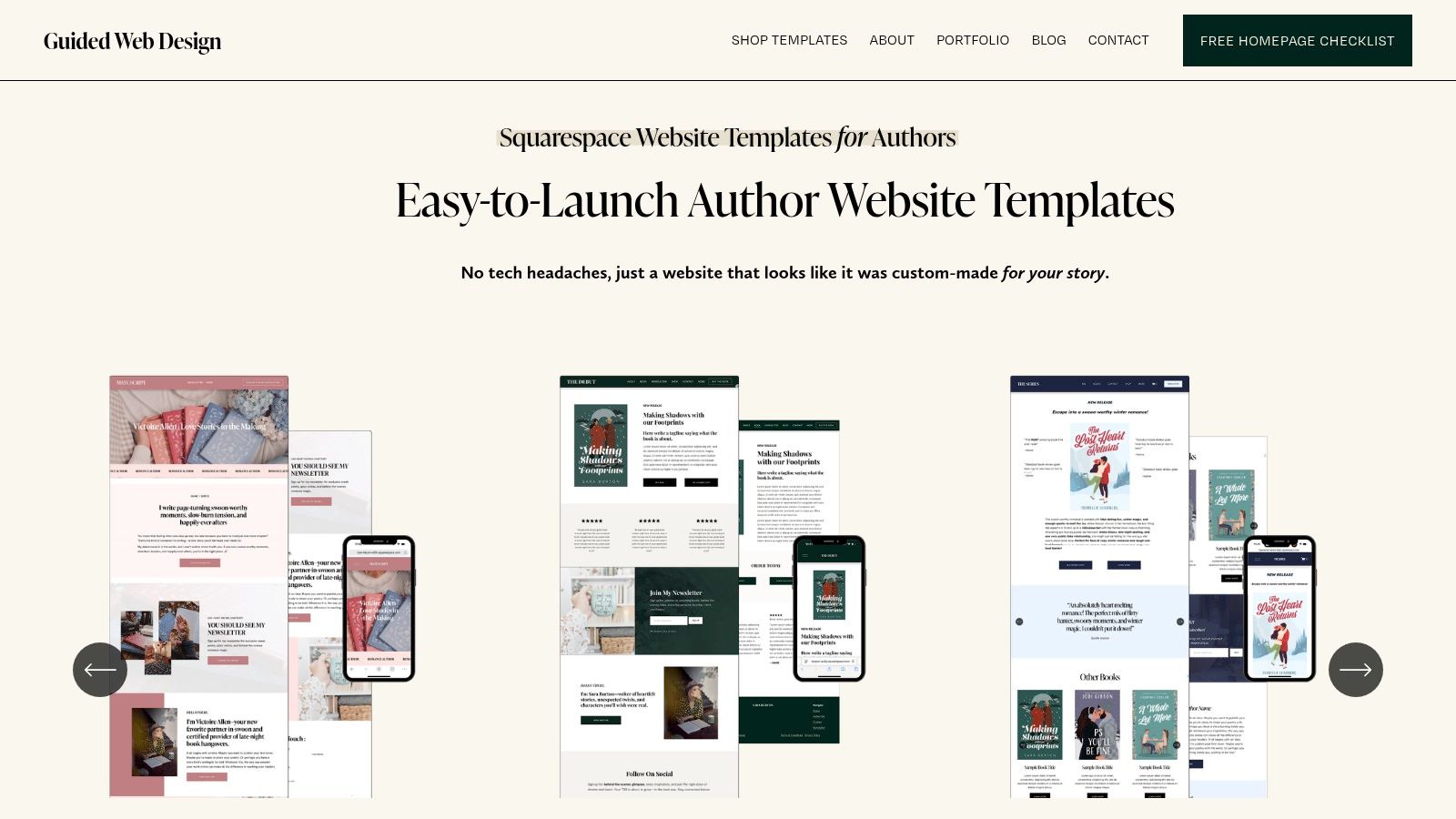
The core offering is its simplicity and author-centric design. When you purchase a template, it is pre-installed directly into your Squarespace account, often within 24-48 hours. This eliminates the technical setup and guesswork. Each template includes essential author pages like dedicated book showcases, event calendars, and prominent newsletter sign-up forms, making it an excellent resource for sample websites for authors seeking a proven, effective layout. Step-by-step tutorials and launch checklists are also included to guide you through the customization process.
Strategic Breakdown & Actionable Takeaways
What Makes It Stand Out:
- Pre-Installed & Guided: The service removes the initial technical hurdle by installing the template for you. The included tutorials empower authors to confidently manage and update their own site.
- Author-Centric Structure: Templates are not just visually appealing; they are strategically structured for book marketing, focusing on clear calls-to-action for book sales and mailing list growth.
Key Insight: Guided Web Design is ideal for authors who want a professional, agency-quality Squarespace site without the high price tag. It provides the perfect balance of professional design and DIY control.
Pricing and Access:
The primary cost is a low one-time fee for the template itself, which is significantly more affordable than a custom design project. After the template purchase, you are only responsible for the ongoing Squarespace subscription, which starts at around $16 per month for personal plans.
Pros & Cons:
| Pros | Cons |
|---|---|
| Very Low One-Time Pricing: A professional foundation for a fraction of the cost of custom design. | Platform Lock-In: Templates are built for Squarespace and cannot be migrated to another platform. |
| Reduces Setup Time: Pre-installed templates with author-focused pages save hours of work. | DIY-Style Support: Support is primarily through tutorials, not the hands-on service of a full agency. |
| Strategic Author Layouts: Designed to help authors market books and build an audience effectively. | Requires Squarespace Subscription: You must maintain a paid Squarespace plan to keep the site live. |
Explore Guided Web Design templates at: https://guidedwebdesign.com/
7-Point Comparison: Author Website Templates
| Option | 🔄 Implementation Complexity | ⚡ Resource Requirements | 📊 Expected Outcomes | 💡 Ideal Use Cases | ⭐ Key Advantages |
|---|---|---|---|---|---|
| Sugar Pixels | Low client effort; agency-managed turnkey workflow (2–6 weeks) | Moderate–high cost (monthly/annual plans); ongoing maintenance optional | Professional, conversion-focused site with integrated marketing — SEO/results not guaranteed | Businesses wanting full-service build, e‑commerce, affiliate programs | All-in-one agency, tiered support, hands-on conversions |
| Wix Website Templates (Literary) | Very low — drag-and-drop templates, instant load into editor | Low cost to start; minimal technical skills; platform-locked | Fast launch of basic author site with blog and commerce | Authors who need a quick, no-code site | Large author template variety; fastest time-to-launch |
| Squarespace Templates (incl. third‑party) | Low–medium — polished templates, Fluid Engine learning curve | Paid plans only; hosting included; moderate time for styling | Stylish, stable sites with built-in blog, commerce and newsletter | Creators who prioritize design and simplicity | High design quality; unified hosting and features |
| WordPress.org Themes Directory | Medium–high — setup, hosting, security and updates handled by user | Low theme cost (often free) but need hosting, backups, maintenance | Fully owned and extensible site; results depend on plugins/effort | Authors needing control, extensibility and WooCommerce | Large ecosystem, full control, no template cost |
| Webflow Templates Marketplace | Medium — visual designer with steeper learning curve | Paid Webflow plans may be higher; greater design time | Professional-grade visuals and CMS; exportable code on some plans | Authors wanting high design control without coding | Strong design flexibility and polished CMS structure |
| ThemeForest (Envato) | Varies by item — mostly one-click demo import but may require builders | One-time purchase; potential extra costs for plugins or developer help | Specialized designs tailored to book promotion; quality varies | Buyers seeking niche or inexpensive custom-looking themes | Huge selection; marketplace metrics to vet authors |
| Guided Web Design (Squarespace) | Very low — pre-installation into Squarespace, tutorial-led | Low one-time template fee + Squarespace subscription | Quick, author-focused setup with launch checklists | Authors on Squarespace who want a fast, guided setup | Pre-installation service, author-specific structure, low price |
Choosing Your Blueprint: How to Build Your Perfect Author Website
We've explored a diverse gallery of sample websites for authors, from the elegant simplicity of Squarespace templates to the boundless customization of WordPress and Webflow. Each example serves as a testament to the power of a well-crafted digital home, showcasing how strategic design and thoughtful functionality can transform a simple author bio into a powerful marketing engine. The key takeaway is clear: your author website is not just a digital business card; it is the central hub of your author brand, a direct line to your readers, and a critical tool for building a sustainable career.
From our analysis, several core principles have emerged. A successful author website prioritizes a clean, intuitive user experience, placing the most important information, your books, front and center. It features a prominent and compelling call to action for your mailing list, recognizing that an engaged email list is one of an author's most valuable assets. Furthermore, it reflects your unique author brand through consistent visuals, voice, and tone, creating an authentic connection with your audience.
Turning Inspiration into Action
Now, it's time to translate these insights into a tangible plan. The examples we’ve reviewed weren't built on guesswork; they were constructed with clear goals in mind. Before you select a template or hire a designer, take a moment to define what success looks like for your website.
- Define Your Primary Goal: Is your main objective to sell books directly, grow your newsletter subscribers, or book speaking engagements? Your primary goal will dictate the layout and focus of your homepage.
- Know Your Audience: Are you writing for young adults who appreciate dynamic visuals, or for a literary fiction audience that values elegant typography and a minimalist design? Your design choices should appeal directly to your target readers.
- Assess Your Technical Comfort: Be realistic about your skills and available time. If you're tech-savvy and crave total control, a WordPress or Webflow theme might be perfect. If you need a beautiful, low-maintenance site you can launch quickly, platforms like Wix, Squarespace, and specialized providers like Guided Web Design are excellent choices.
Understanding these foundational elements is crucial. To dive deeper into the overarching process of establishing your online presence, explore these essential steps for creating an author website that sells books which provide a comprehensive roadmap from start to finish.
Final Thoughts on Your Digital Headquarters
The journey to building the perfect author website begins with inspiration and ends with implementation. The templates and platforms we've highlighted, from the vast marketplace of ThemeForest to dedicated author-centric services, offer a blueprint for success. Remember that your website is a living platform, one that will evolve with your career. Start with a strong foundation focused on your books and your readers, and you will have created a powerful asset that works for you 24/7. Your story deserves a beautiful home online; now you have the tools to build it.
Ready to build a website that captures your author brand and captivates readers? Sugar Pixels offers professionally designed, easy-to-customize website templates built specifically for authors on the user-friendly Squarespace and Showit platforms. Explore the collection at Sugar Pixels and launch your stunning new author website in days, not months.