

Referral marketing remains one of the most powerful and cost-effective growth channels, turning your happy customers into a dedicated, high-trust sales force. Yet, simply launching a program is no guarantee of success. A high-performing referral system is a strategic engine, carefully engineered with the right incentives, compelling messaging, and a frictionless user experience. Many businesses falter here, creating programs with low participation, unclear value, and wasted potential.
This guide moves beyond generic advice. We will dissect a curated collection of high-impact referral program examples, revealing the specific mechanics that drive their success. You won't just see what they did; you'll understand why it works and how you can replicate it. Each example is a blueprint, complete with screenshots, strategic analysis, and direct links to see the program in action.
We’ll break down the tactics used by leading brands and platforms like ReferralCandy and Talkable, providing actionable takeaways and replicable templates. You will learn how to design offers that motivate both the referrer and the new customer, craft copy that converts, and build a seamless sharing process. Forget theory-this is a practical playbook for building a referral program that not only acquires new, high-value customers but also deepens loyalty with the advocates you already have. Let's dive into the blueprints that top brands use to fuel their growth.
1. ReferralCandy
ReferralCandy is a powerful software platform designed for ecommerce businesses to create, launch, and manage customer referral programs with minimal technical effort. It stands out by combining user-friendly software with an extensive public library of tactical guides and real-world referral program examples, making it an invaluable resource for both inspiration and execution. For small to medium-sized businesses and direct-to-consumer (DTC) brands, especially those on Shopify, it offers one of the fastest paths to a fully functional word-of-mouth marketing channel.
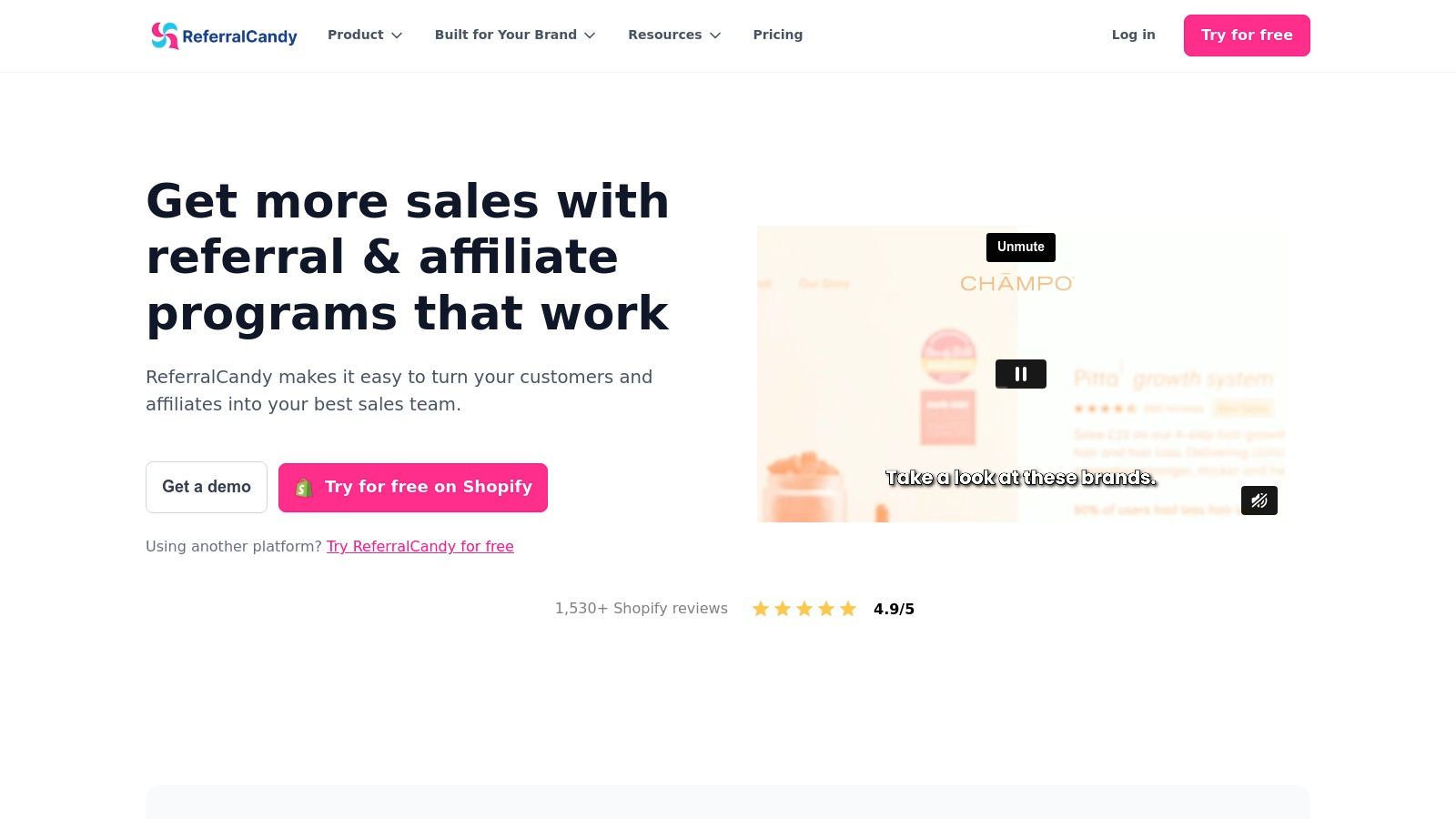
The platform's core strength lies in its pre-built, customizable referral flows. Users can quickly set up branded landing pages, pop-up widgets, and automated emails to invite customers to become advocates. This automation removes the manual work often associated with tracking referrals, calculating rewards, and paying out advocates, allowing business owners to focus on promotion rather than administration. The direct integrations with major platforms like Shopify, Klaviyo, and Recharge ensure a seamless data flow, connecting referral activity directly to sales and marketing efforts.
Strategic Analysis & Actionable Takeaways
ReferralCandy's model is built on aligning its success with the merchant's. Its pricing structure, which includes a monthly fee plus a commission on referred sales, ensures the platform is motivated to help you generate revenue. This approach can be cost-effective for brands starting out but may become a significant expense at high volumes.
Key Insight: The true value of ReferralCandy for new businesses isn't just the software; it's the educational ecosystem. Their extensive blog and example gallery provide a blueprint for what works, saving you from costly trial and error.
Actionable Takeaways:
- Model Success: Before building your program, browse ReferralCandy’s gallery of referral program examples in your industry. Identify common reward structures (e.g., "$20 for you, $20 for your friend") and copy styles that resonate with your target audience.
- Leverage Integrations: Connect ReferralCandy to your email marketing platform (like Klaviyo) to segment and target your most loyal customers with special referral invitations. This strategy can significantly increase customer lifetime value by turning happy buyers into active promoters.
- Test Your Incentives: Start with a simple, compelling two-sided incentive. Use the platform’s dashboard to track advocate engagement and conversion rates, then adjust the reward amounts or types (cash vs. discount) based on performance data.
Platform Breakdown
| Feature | Details | Best For |
|---|---|---|
| Setup & Launch | Template-based flows, one-click Shopify integration | Businesses needing to launch a referral program in under an hour. |
| Pricing Model | Monthly subscription + success-based commission | Startups and SMBs who prefer a pay-for-performance model. |
| Customization | Visual editor for basic branding; API for deep customization | Most DTC brands; developers needing API access on higher-tier plans. |
| Resources | Huge public library of examples, guides, and case studies | Marketers looking for proven templates and strategic inspiration. |
Website: https://www.referralcandy.com
2. Friendbuy
Friendbuy is an enterprise-grade referral and loyalty platform that caters specifically to growth-stage and established ecommerce brands. It has carved out a niche by offering deep customization, a powerful rules-based engine, and white-glove onboarding services. Where other platforms focus on ease of setup, Friendbuy emphasizes optimization and scalability, making it a go-to for high-volume retailers like Casper, Away, and Figs who need more than a basic out-of-the-box solution. The platform's extensive library of case studies provides concrete referral program examples with documented ROI.
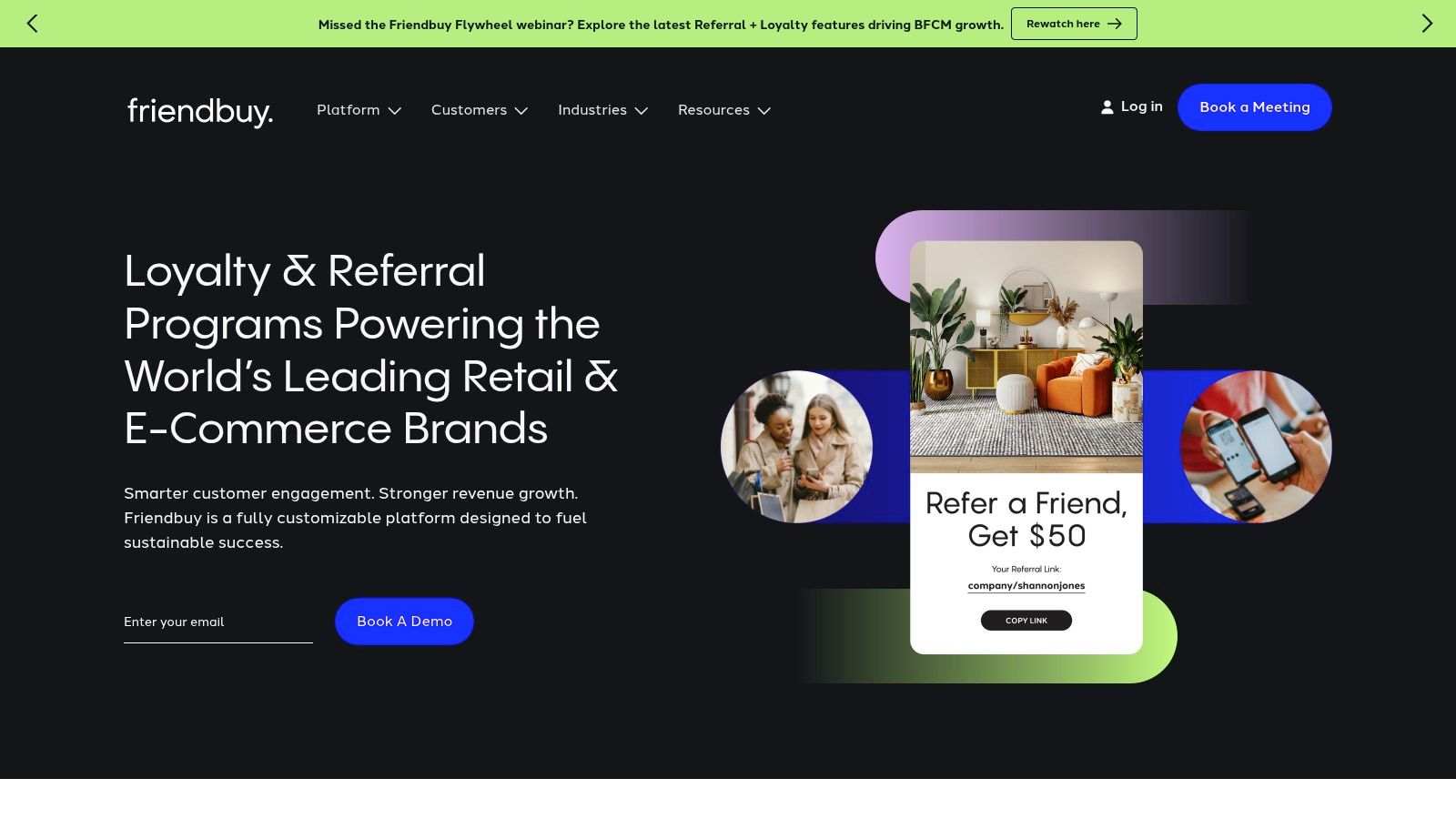
The platform's core advantage is its robust rules engine, which allows businesses to create highly targeted and flexible incentive structures. Brands can move beyond simple "give $10, get $10" models to implement tiered rewards, event-based bonuses, and segment-specific offers. This level of control, combined with deep integrations into marketing stacks like Klaviyo and Attentive, enables hyper-personalized referral campaigns. The hands-on support, from program design to launch and ongoing optimization, ensures that enterprise teams can maximize their return on investment without being bogged down by technical implementation.
Strategic Analysis & Actionable Takeaways
Friendbuy’s model is built for businesses that have already validated their product-market fit and are ready to scale their word-of-mouth channel aggressively. The quote-based pricing and focus on strategic support mean it's an investment, not an entry-level tool. This approach positions the referral program as a core revenue driver, deeply integrated with the overall marketing strategy, rather than a standalone add-on.
Key Insight: Friendbuy excels at turning referral marketing into a science. By providing a flexible rules engine and dedicated success management, it allows brands to test complex hypotheses and optimize for specific KPIs like customer acquisition cost (CAC) and lifetime value (LTV).
Actionable Takeaways:
- Study Enterprise Blueprints: Analyze Friendbuy's case studies for brands in your vertical. Pay close attention to the specific "give/get" mechanics and the A/B tests they ran (e.g., dollar discount vs. percentage discount) to understand what drives conversions at scale.
- Design Tiered Incentives: If you have an established customer base, use a platform like Friendbuy to create a tiered program. For example, reward advocates with a larger bonus after their third or fifth successful referral to encourage repeat sharing and create super-advocates.
- Segment Your Advocates: Integrate your referral platform with your CRM or email service provider. Create a segment of customers with high LTV or multiple repeat purchases and invite them to an exclusive, high-reward referral program. This targets those most likely to refer quality new customers.
Platform Breakdown
| Feature | Details | Best For |
|---|---|---|
| Setup & Launch | White-glove onboarding and dedicated program design. | Enterprise teams needing strategic support and custom implementation. |
| Pricing Model | Sales-led, custom quote-based pricing. | Growth-stage and enterprise ecommerce businesses with larger budgets. |
| Customization | Powerful rules engine, API access, extensive branding controls. | Brands requiring complex, multi-tiered, or segmented referral logic. |
| Resources | Detailed, ROI-focused case studies and a success team. | Marketers looking for proven strategies from top-tier D2C brands. |
Website: https://www.friendbuy.com
3. Referral Rock
Referral Rock is a versatile referral software platform designed for both B2C and B2B companies, extending its utility well beyond the typical ecommerce focus. It excels at helping businesses in sectors like services, SaaS, and professional services build and manage sophisticated word-of-mouth marketing programs. The platform provides a suite of tools for creating customized member portals and landing pages, enabling businesses to manage multiple types of programs for different audiences, including customers, partners, and affiliates, all from a single dashboard.
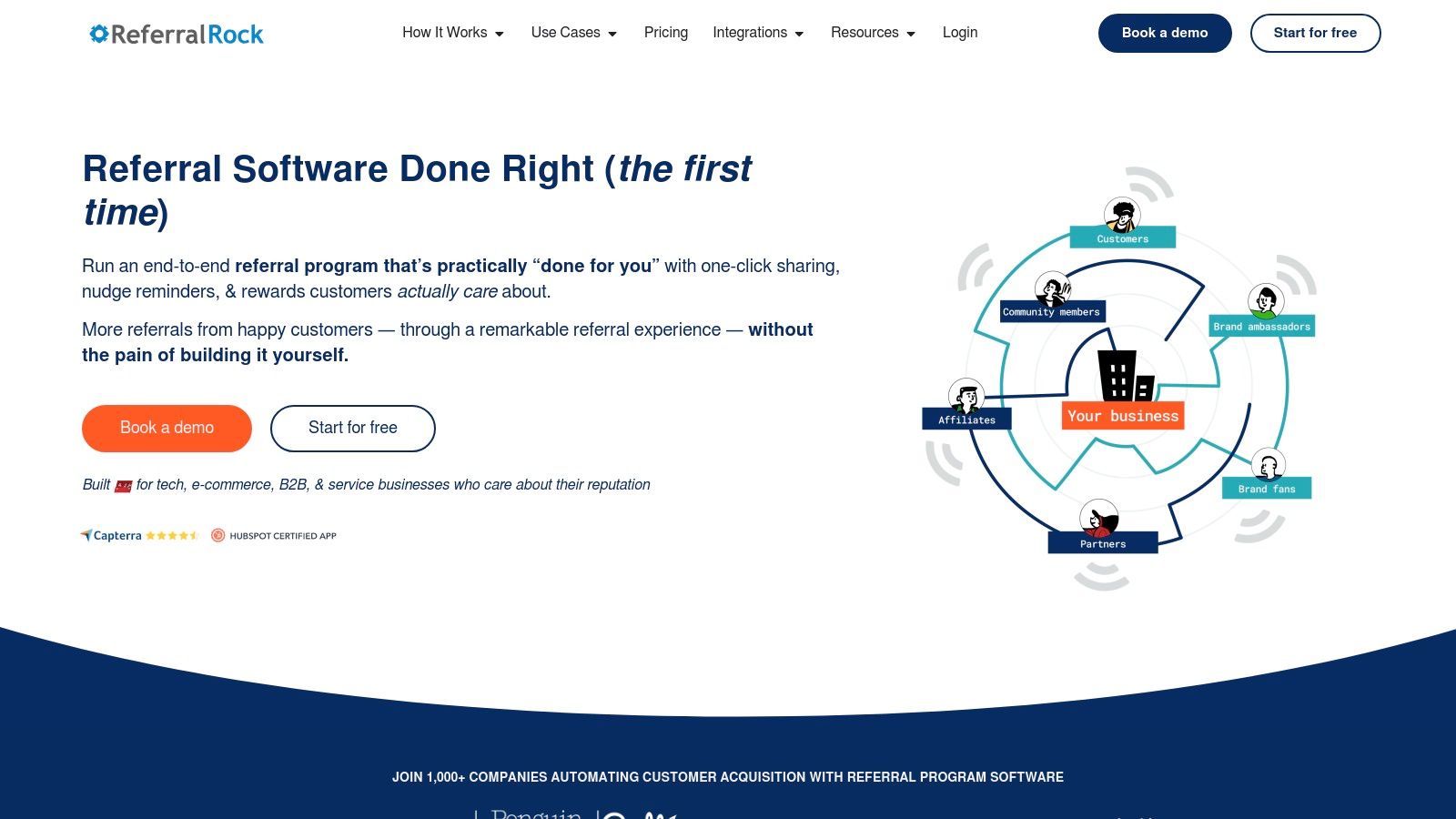
The platform's strength lies in its flexibility and guided setup process. Referral Rock's concierge onboarding, included with annual plans, helps businesses navigate the complexities of program design, from setting reward triggers to integrating with existing CRMs like HubSpot and Salesforce. This hands-on support, combined with a transparent pricing model, makes it an attractive mid-market option for companies that need more than a basic ecommerce plug-in but are not ready for a fully custom enterprise solution. It effectively tracks the entire referral lifecycle, from the initial share to the final payout.
Strategic Analysis & Actionable Takeaways
Referral Rock’s model is built for businesses with diverse partner and customer bases. Its ability to run separate programs for customers, affiliates, and strategic partners allows a company to tailor incentives and messaging appropriately. While its pricing is transparent, businesses should be mindful of the overage fees for high referral volumes and the extra costs for CRM add-ons, planning their budget accordingly as they scale.
Key Insight: Referral Rock's key advantage is its applicability beyond product sales. It can trigger rewards based on qualified leads, demo requests, or signed contracts, making it one of the best referral program examples for service-based and B2B businesses.
Actionable Takeaways:
- Segment Your Advocates: Use Referral Rock to create distinct programs. Offer customers a service credit for referring new clients, while offering partners a cash commission for referring qualified leads. This segmentation maximizes motivation for each group.
- Integrate with Your CRM: Connect Referral Rock to your Salesforce or HubSpot account. This creates a closed-loop system where you can track the journey from referred lead to closed-won deal, accurately measuring the ROI of your referral channel.
- Leverage Partner Programs: Go beyond customer referrals and build a formal partner or affiliate program. This can be a powerful growth engine, and Referral Rock has the infrastructure to manage these more complex relationships, as detailed when you learn more about starting an affiliate program.
Platform Breakdown
| Feature | Details | Best For |
|---|---|---|
| Setup & Launch | Guided setup with templates; concierge onboarding with annual plans. | Businesses needing hands-on help launching a complex program. |
| Pricing Model | Tiered monthly subscriptions with clear referral limits; overage fees apply. | Mid-market B2B and service companies wanting predictable costs. |
| Customization | Hosted member portals, customizable widgets, and API/webhook access. | Companies needing to run multiple, distinct referral or partner programs. |
| Integrations | Native integrations with major CRMs (add-on cost), Zapier, webhooks. | SaaS, professional services, and agencies reliant on a CRM-centric workflow. |
Website: https://referralrock.com
4. Shopify App Store – Referral Apps Collection
For the millions of merchants on Shopify, the Shopify App Store is the central command for extending their store's functionality, and its curated collection of referral apps is an indispensable starting point. Rather than a single software solution, it’s a marketplace where businesses can browse, compare, and trial a wide range of referral marketing tools. This makes it an essential resource for finding real-world referral program examples and the technology that powers them, with transparent reviews and pricing from vendors like ReferralCandy, Smile.io, and UpPromote.
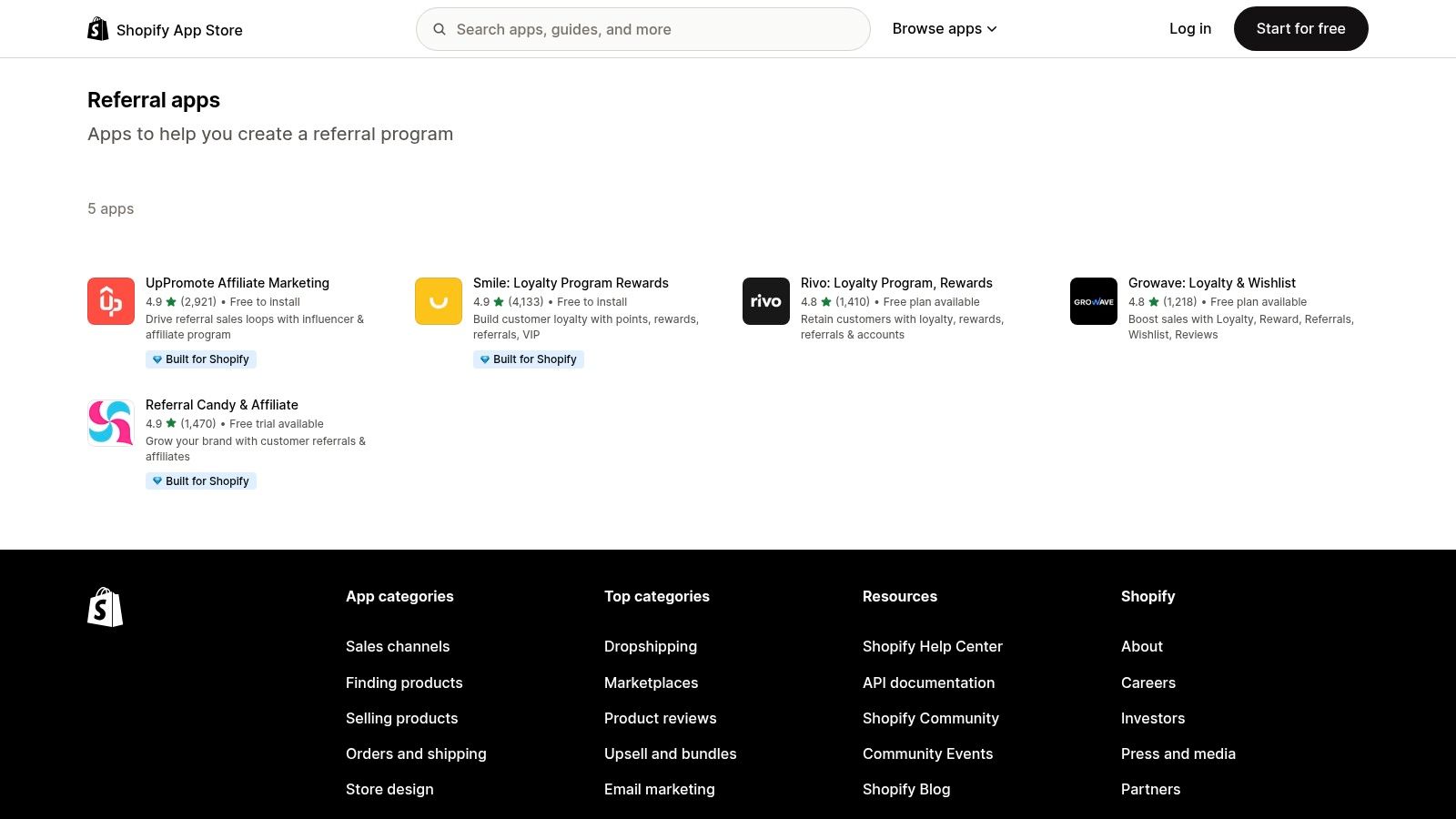
The primary strength of the App Store is its seamless integration into the Shopify ecosystem. Merchants can install and test different referral apps with a single click, often with free trials or freemium plans available. Each app listing serves as a mini-case study, complete with screenshots of the user interface, feature lists, and unfiltered reviews from other store owners. This wealth of social proof and operational detail allows merchants to quickly evaluate which tool best fits their budget, technical skill, and marketing strategy without ever leaving their Shopify dashboard.
Strategic Analysis & Actionable Takeaways
The Shopify App Store democratizes access to sophisticated referral marketing technology. Its competitive nature means app developers must offer compelling features, transparent pricing, and robust support to stand out. For merchants, this translates into a "try before you buy" environment where you can assess an app's impact on your business with minimal risk. The downside is that quality can vary significantly, requiring careful due diligence.
Key Insight: The App Store's review system is its most valuable feature. Pay close attention to recent reviews that mention customer support quality and any issues with theme compatibility, as these are often the biggest pain points for merchants.
Actionable Takeaways:
- Filter and Compare: Use the App Store's filtering options to narrow down choices based on price, star rating, and key features. Create a shortlist of 2-3 top contenders and install them on a development store to test their user experience and setup process.
- Analyze Competitor Stacks: Look for reviews left by brands similar to yours. Seeing what apps your direct or aspirational competitors use can provide a powerful clue about which platforms are effective in your specific niche.
- Prioritize Integration Depth: Evaluate how well a referral app integrates with your existing marketing stack (e.g., your email service provider, pop-up tool, or loyalty program). A deeply integrated app will automate more tasks and provide more unified customer data.
Platform Breakdown
| Feature | Details | Best For |
|---|---|---|
| Setup & Launch | One-click installs, storefront-ready integrations. | Shopify merchants who need a fast, low-friction setup. |
| Pricing Model | Varies by app: freemium, flat monthly fees, commissions. | Businesses of all sizes, from those needing a free starting plan to those ready for enterprise features. |
| Customization | Depends on the app vendor; ranges from basic branding to full API access. | Merchants who want to compare different levels of customization before committing. |
| Resources | Rich merchant reviews, screenshots, feature comparisons, and suggested alternatives. | Store owners conducting due diligence and looking for social proof to guide their decision. |
Website: https://apps.shopify.com/collections/referral-apps
5. G2 – Referral Software Category
G2 is a comprehensive software marketplace and peer-review platform that provides an objective, bird's-eye view of the referral marketing landscape. Rather than being a single tool, it serves as a critical research destination where businesses can compare dozens of referral and advocacy platforms based on verified user ratings, feature sets, and market presence. This makes it an essential first stop for anyone shortlisting software, allowing for an efficient evaluation of the best tools to build and manage referral program examples.
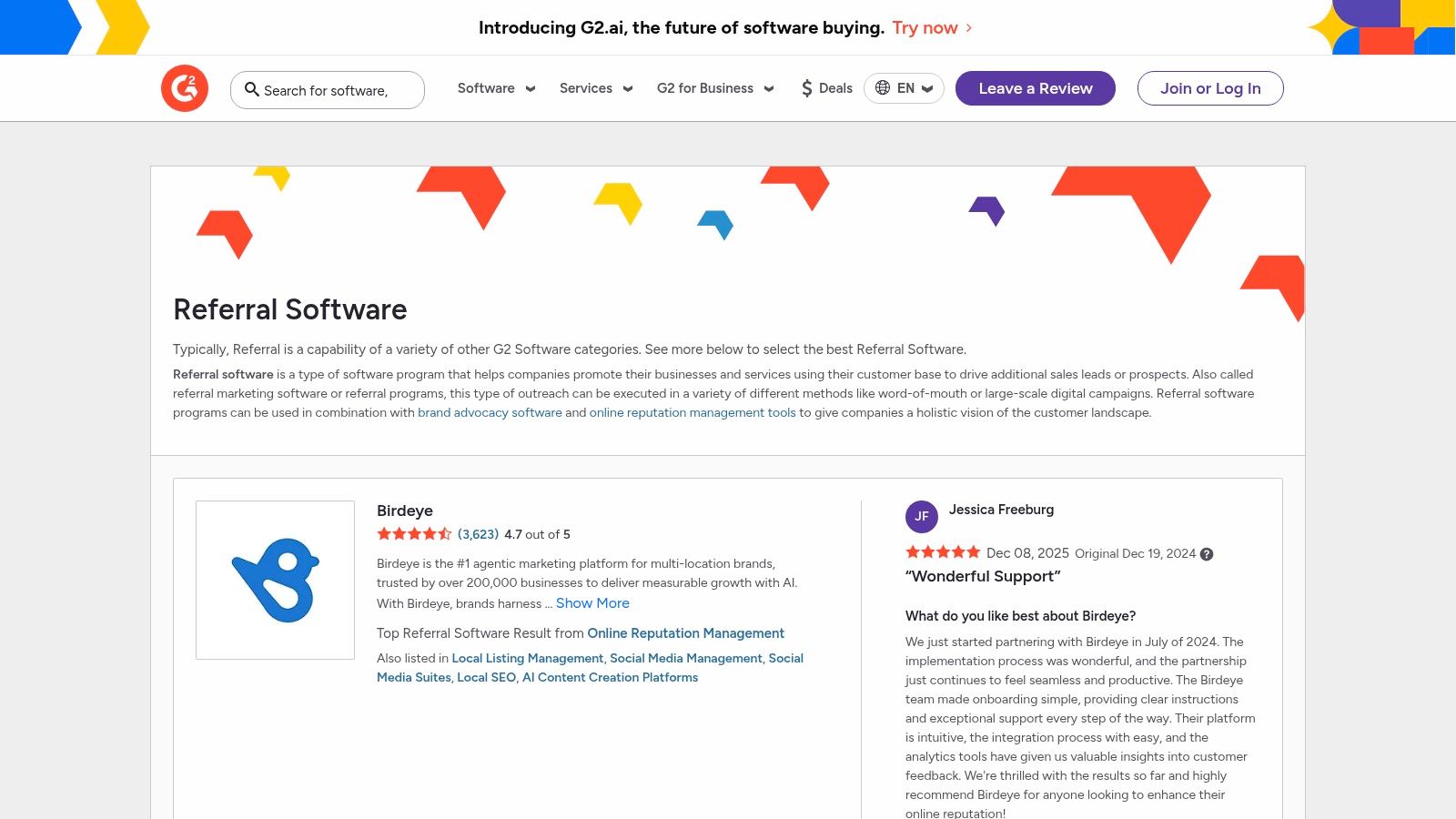
The platform’s strength lies in its user-generated content and robust filtering capabilities. You can sort software solutions by company size (SMB, Mid-Market, Enterprise), specific features like gamification or analytics, and integration capabilities. The authentic user reviews often contain practical insights into the pros and cons of deployment, customer support quality, and real-world ROI, providing a layer of transparency you won't find on a vendor's website. G2 also highlights related software categories, such as affiliate and partner management, which helps businesses understand the broader ecosystem.
Strategic Analysis & Actionable Takeaways
G2’s value is in saving you countless hours of research and preventing costly mistakes by leveraging the collective experience of thousands of real users. It helps you move beyond marketing claims to understand how a platform actually performs in a live business environment. However, it's crucial to look past sponsored placements and use the filters to drill down to the most relevant and highly-rated options for your specific needs.
Key Insight: G2's user reviews are a goldmine for competitive analysis. By reading what users love and hate about top platforms, you can identify must-have features and potential pitfalls to inform your own referral program strategy, even before you select a tool.
Actionable Takeaways:
- Create a Shortlist: Use G2’s comparison feature to select your top 3-4 referral software candidates. Export the comparison data to create a features checklist tailored to your business requirements (e.g., Shopify integration, automated reward fulfillment, multi-language support).
- Analyze User Feedback: Dive deep into the reviews for your shortlisted platforms. Look for patterns in feedback related to ease of setup, quality of customer support, and any hidden costs or limitations. This helps you prepare specific questions for vendor demos.
- Explore Adjacent Categories: Use G2 to understand the difference between referral, affiliate, and partner programs. This research clarifies which marketing channel best suits your goals; for instance, you can explore the distinct benefits of affiliate marketing to see if it complements your referral strategy. To explore another leading platform, consider the features and benefits of the Partnerstack Affiliate Program.
Platform Breakdown
| Feature | Details | Best For |
|---|---|---|
| Market Overview | Category page with filters for features, ratings, and company size. | Businesses in the initial research phase of selecting referral software. |
| User Reviews | Extensive, verified user reviews with detailed pros and cons. | Gaining unbiased, practical insights before committing to a platform. |
| Product Comparison | Side-by-side comparison of features, pricing, and ratings. | Decision-makers who need to justify a software purchase internally. |
| Pricing Info | Often includes starting prices and model (e.g., per user, commission). | Getting a ballpark budget, though direct vendor verification is needed. |
Website: https://www.g2.com/software/referral
6. Talkable
Talkable is an enterprise-grade referral and loyalty platform designed for mid-market and enterprise ecommerce brands that require a high-touch, strategic partnership. It distinguishes itself by combining a robust technology platform with managed services, including dedicated optimization and A/B testing. This makes it an ideal choice for larger teams looking to outsource the strategic heavy lifting and launch highly customized, performance-driven word-of-mouth marketing campaigns with clear ROI.
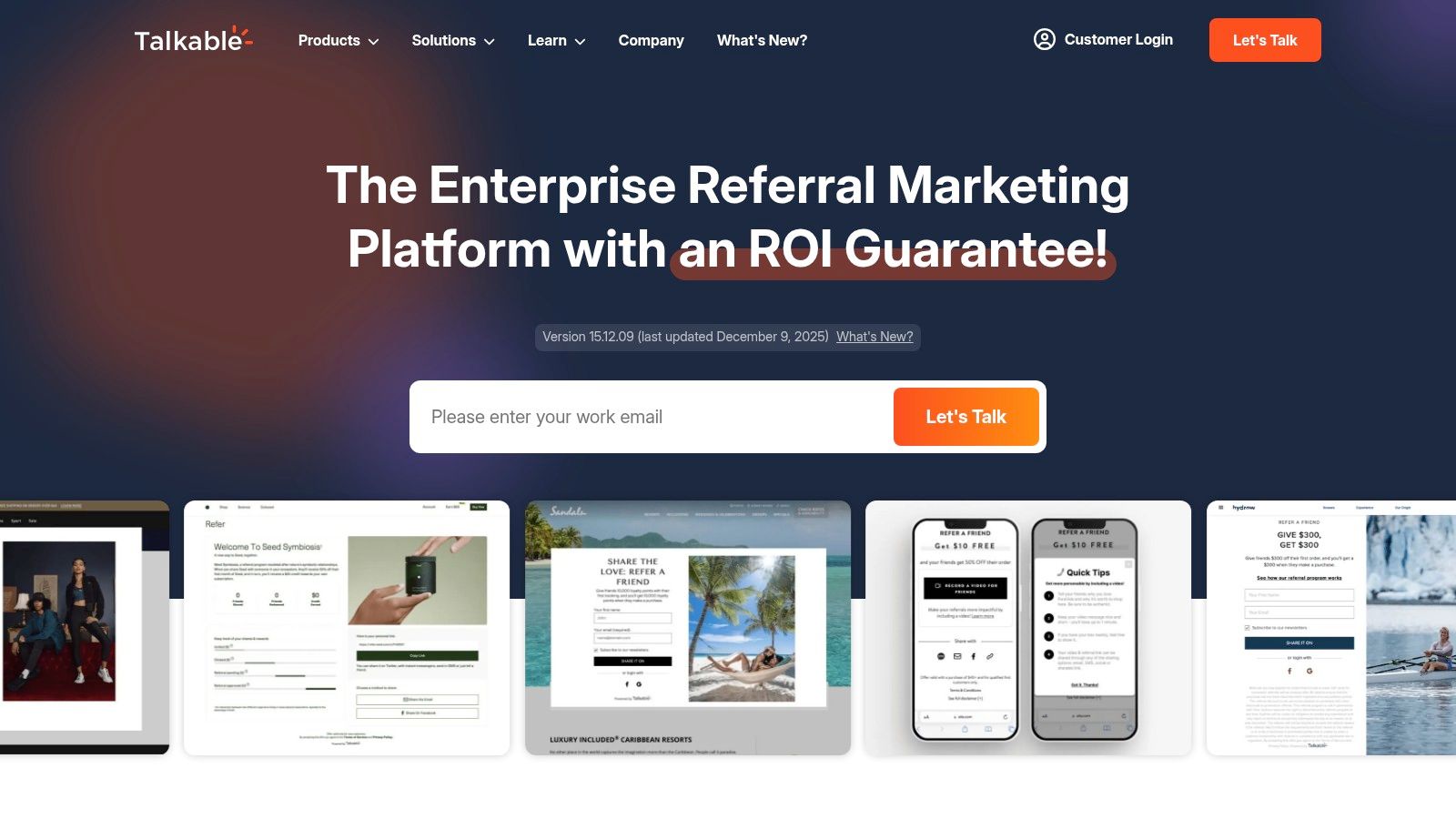
The platform's core value is its hands-on approach. Clients receive strategic guidance from a dedicated success manager, leveraging Talkable's extensive library of vertical-specific playbooks and data from past campaigns. This service layer, combined with a powerful A/B testing suite and advanced anti-fraud controls, allows brands to rigorously test and optimize every component of their referral funnel. From incentive structures to campaign copy, the goal is to identify the most effective combination to maximize customer acquisition and revenue lift.
Strategic Analysis & Actionable Takeaways
Talkable's model is best suited for established brands with significant customer volume and internal resources to collaborate with the platform's team. Its flat-fee pricing, which is sales-led and typically involves 12-month contracts with implementation fees, reflects its positioning as a strategic partner rather than just a software tool. This structure provides budget predictability for high-volume businesses where a commission-based model could become prohibitively expensive.
Key Insight: Talkable's detailed case studies are a goldmine of referral program examples and strategic insights. They often reveal specific A/B test results, conversion rate lifts, and ROI figures, providing a rare look into the mechanics of high-performing enterprise programs.
Actionable Takeaways:
- Study Vertical Playbooks: Even if you don't use the platform, analyze Talkable's case studies for brands in your industry. Note the specific KPIs they track (like advocacy rates and purchase-per-advocate) and the creative tactics they test, such as tiered rewards or post-purchase overlay placements.
- Embrace Rigorous A/B Testing: Adopt Talkable's data-driven mindset. Identify one key variable in your own referral program (e.g., the headline, the friend's offer) and run a controlled test. Small changes can lead to significant improvements in sharing and conversion rates.
- Prioritize Fraud Prevention: As your program scales, fraud becomes a bigger risk. Implement rules similar to Talkable’s, such as blocking self-referrals and flagging suspicious activity, to protect your program’s integrity and budget.
Platform Breakdown
| Feature | Details | Best For |
|---|---|---|
| Setup & Launch | Managed launch and optimization by a dedicated success team. | Enterprise brands needing a fast, strategic, and fully managed deployment. |
| Pricing Model | Flat-fee subscription; sales-led with annual contracts. | High-volume businesses seeking predictable costs and premium support. |
| Customization | Deep customization capabilities and advanced A/B testing suite. | Marketing teams focused on data-driven optimization and maximizing ROI. |
| Resources | Detailed case studies with measured lifts and ROI data. | Strategists wanting to deconstruct successful referral program examples. |
Website: https://www.talkable.com
7. Referral Factory
Referral Factory is a highly accessible referral marketing platform that champions a template-driven approach, making it ideal for businesses that want to launch quickly without significant development resources. It distinguishes itself with a vast public library of over 100 ready-to-use templates for various industries, from B2B services to consumer brands. This makes it an exceptional resource for marketers who want to learn from tangible referral program examples and adapt proven frameworks to their own needs.
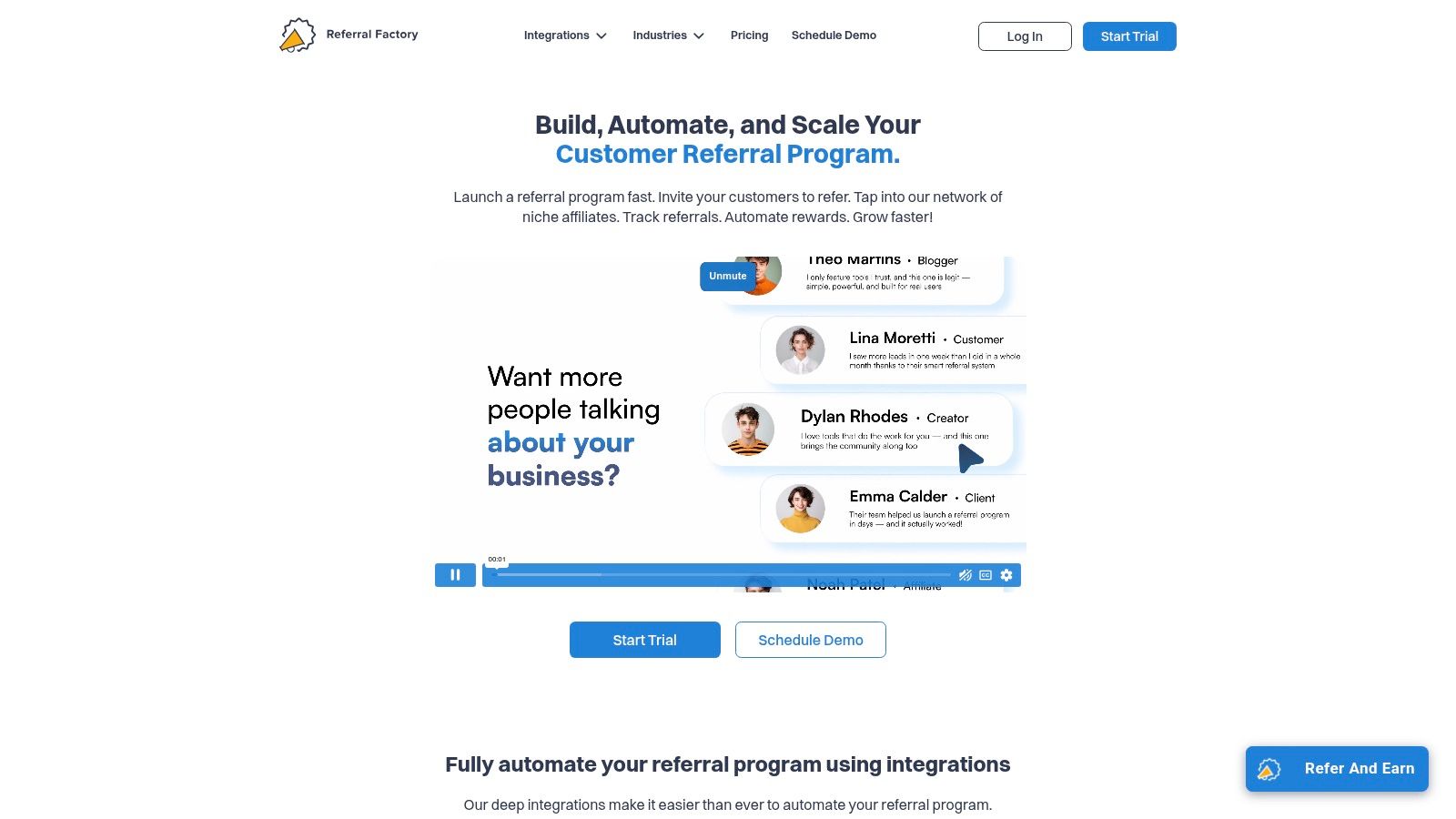
The platform’s core value proposition is speed and simplicity. Users can select a pre-built campaign, customize it with a drag-and-drop builder, and launch a complete referral program in minutes. This process bypasses the complexities of building referral logic from scratch. Referral Factory handles the entire workflow, from generating unique referral links to tracking conversions and managing reward payouts (including cash, gift cards, and custom rewards), complete with fraud detection alerts to maintain program integrity.
Strategic Analysis & Actionable Takeaways
Referral Factory's model is designed for scalability, with clear pricing tiers that accommodate growth. Its low starting price and generous user limits on entry-level plans make it attractive for startups and small businesses. However, more advanced features like complete white-labeling and single sign-on (SSO) are reserved for higher-tier plans, which is a key consideration for larger enterprises needing deep brand integration.
Key Insight: Referral Factory’s greatest strength is its ability to demystify program creation. By offering industry-specific templates, it removes the guesswork and provides a solid, field-tested foundation for your first campaign.
Actionable Takeaways:
- Borrow from the Best: Explore Referral Factory's template library to find a campaign designed for a business similar to yours. Analyze the proposed incentive structure and copy, then use it as a starting point for your own program.
- Integrate for Automation: Connect Referral Factory to your CRM (like HubSpot or Salesforce) using its native integrations or Zapier. This allows you to automatically enroll new customers into your referral program and track their advocacy within your existing customer management workflow.
- Start Simple, Then Scale: Launch your program using a basic template and a straightforward reward. As you gather data on what motivates your referrers, you can create more complex, tailored campaigns using the drag-and-drop builder without needing to switch platforms.
Platform Breakdown
| Feature | Details | Best For |
|---|---|---|
| Setup & Launch | 100+ ready-to-copy templates and a drag-and-drop builder. | Businesses wanting to launch a structured program very quickly. |
| Pricing Model | Tiered monthly subscriptions based on user volume and features. | Startups and SMBs who need a low, predictable starting cost. |
| Customization | Drag-and-drop editor for all tiers; full white-labeling on Pro+ plans. | Most businesses; enterprises needing full brand control on higher tiers. |
| Resources | Extensive public library of templates categorized by industry. | Marketers looking for plug-and-play referral program examples. |
Website: https://referral-factory.com
Top 7 Referral Program Platforms Comparison
| Product | Implementation complexity 🔄 | Resource requirements ⚡ | Expected outcomes ⭐📊 | Ideal use cases 💡 | Key advantages |
|---|---|---|---|---|---|
| ReferralCandy | Low — prebuilt referral flows and one‑click Shopify integrations | Low internal resources; success‑fee costs scale with volume | Quick referral lift for DTC/SMBs; tactical examples drive faster wins | SMBs / DTC Shopify stores wanting fast deployment | Large example gallery; fast to launch; success‑fee alignment |
| Friendbuy | Medium–High — rules‑based engine and enterprise integrations; white‑glove setup | Moderate–High budget; requires growth/enterprise team | High ROI potential when well‑executed for enterprise brands | US ecommerce enterprise and growth teams | Flexible rewards & rules; strong customer success; documented case studies |
| Referral Rock | Medium — concierge onboarding; multi‑audience templates and tracking | Mid‑market budget; add‑ons (CRM/webhooks) may increase cost | Reliable lifecycle tracking across B2B and B2C programs | Services, SaaS, mid‑market businesses needing clear pricing | Transparent pricing; multi‑audience (customers, partners, affiliates) support |
| Shopify App Store – Referral Apps Collection | Low — easy installs and trials; requires vendor comparison | Low internal effort (Shopify only) | Fast evaluation and trialing; results depend on chosen app | Shopify merchants comparing/refining referral options | Curated listings, merchant reviews, free trials and storefront compatibility |
| G2 – Referral Software Category | Low — research platform for shortlisting; vetting required | Low budget impact; time investment for review analysis | Broad market view and up‑to‑date user feedback to inform choices | Teams shortlisting referral/advocacy tools across sizes | Extensive user reviews, filters and cross‑category comparisons |
| Talkable | High — managed optimization, A/B testing and implementation services | High budget; best with internal growth resources | Measured lifts and ROI with managed support and optimization | Mid‑market & enterprise ecommerce seeking strategic, managed programs | Managed launches, A/B testing, vertical playbooks and anti‑fraud controls |
| Referral Factory | Low — template‑driven with drag‑and‑drop builder and many examples | Low starting price; higher tiers for SSO/white‑label | Fast launches using templates; good for learning and scaling | SMBs and teams wanting affordable, template‑based programs | 100+ templates, clear pricing, integrations with common stacks |
Ready to Build Your Growth Engine? Let's Get Started
We've journeyed through a powerful collection of real-world referral program examples, dissecting the strategies that make them successful. From the plug-and-play simplicity of ReferralCandy to the enterprise-level customization offered by Talkable, one truth is clear: the most effective referral programs are not accidents. They are meticulously designed, audience-aware, and seamlessly integrated growth engines.
The examples in this guide demonstrate that success isn't just about offering a reward. It's about understanding the psychology of your customer, removing friction from the sharing process, and creating an experience that feels authentic and valuable to both the advocate and their friend.
Synthesizing the Key Takeaways
As you move from inspiration to implementation, remember these core principles that emerged from our analysis of top-tier referral program examples:
- Incentive Alignment is Crucial: The most potent rewards are those that align with your brand's value and your customers' motivations. Whether it's a cash reward from Referral Rock, a product discount via a Shopify app, or exclusive access, the incentive must be compelling enough to spark action.
- Simplicity Drives Participation: A complicated referral process is a non-starter. As seen in the best examples, a clear, two-to-three-step process for sharing is non-negotiable. The user experience, from finding the referral link to tracking rewards, must be effortless.
- Visibility is Your Best Friend: Don't hide your program. Promote it across multiple touchpoints: post-purchase pages, email signatures, dedicated landing pages, and within your app. The more visible your program, the higher your engagement rates will be.
- The Right Tool Matters: Your choice of software dictates your capabilities. A small e-commerce brand might thrive with a template-based solution like Referral Factory, while a growing SaaS company may need the advanced analytics and A/B testing features of a platform like Friendbuy.
Your Action Plan: Choosing the Right Path Forward
Feeling motivated? The next step is to translate these insights into a concrete plan. Don't let the variety of options cause paralysis. Instead, use this simple framework to guide your decision-making process:
- Define Your Primary Goal: Are you aiming for rapid customer acquisition, increased customer lifetime value, or lower acquisition costs? Your goal will shape your program's structure and key performance indicators (KPIs).
- Understand Your Customer: What truly motivates them? Is it monetary rewards, store credit, or social recognition? Survey your most loyal customers to get direct feedback before you build.
- Assess Your Technical Resources: Be realistic about what your team can handle. Do you need an out-of-the-box solution that integrates easily, or do you have development resources to support a more custom API-based implementation?
- Start Small and Iterate: You don't need the perfect program from day one. Launch a minimum viable program (MVP) to a small segment of your audience. Gather data, learn from it, and optimize over time.
A well-executed referral program is a powerful form of leveraged growth, turning your existing customer base into an enthusiastic and authentic sales force. To further accelerate your growth, explore other effective strategies such as these with our guide on the most impactful, 10 leverage-based marketing techniques for startups. By combining a stellar referral program with other high-leverage tactics, you create a compounding effect that can transform your business trajectory.
The journey from analyzing these referral program examples to launching your own is an exciting one. It’s about building a community, rewarding loyalty, and creating a sustainable channel for high-quality growth.
Feeling inspired by these referral program examples but need an expert partner to bring your vision to life? At Sugar Pixels, we specialize in designing, building, and managing custom referral and affiliate programs that drive measurable results. We handle the strategy and technical complexity, so you can focus on delighting your new customers. Let's build your growth engine together.