

A powerful online presence begins with a great website, but what does "great" truly mean in practice? It's far more than just aesthetics. A superior business website is an engine for growth, meticulously engineered to guide visitors from initial interest to decisive action. It masterfully blends intuitive navigation, persuasive calls-to-action (CTAs), exceptional performance, and a resonant brand message into a cohesive user experience. An effective site solves a core problem: it acts as your 24/7 salesperson, brand ambassador, and customer service hub, all at once.
This comprehensive guide moves beyond surface-level observations. We will dissect 7 standout example business websites and template platforms, deconstructing the specific strategies they employ to attract, engage, and convert their target audiences. Our analysis is designed to be direct and actionable, helping you find the best foundation for your specific needs, whether you're a startup, a growing e-commerce store, or an established enterprise.
For each example, you will find:
- High-resolution screenshots for visual reference.
- Direct links to explore the live site or platform.
- A strategic breakdown of key user experience and conversion elements.
- Actionable takeaways you can apply to your own project immediately.
We’ve cut the fluff to provide a clear, practical roadmap for building a website that not only looks professional but also delivers measurable results. Let's dive into the blueprints of high-performing business websites.
1. Sugar Pixels
Sugar Pixels stands out as a premier example of an all-in-one digital agency that seamlessly blends high-quality web design with integrated marketing and operational services. It's a comprehensive solution designed for businesses that need more than just a visually appealing website; they require a fully-managed digital presence built to attract, convert, and retain customers. This end-to-end approach eliminates the common friction of managing multiple vendors, offering a single, cohesive partner for design, hosting, e-commerce, and growth marketing.
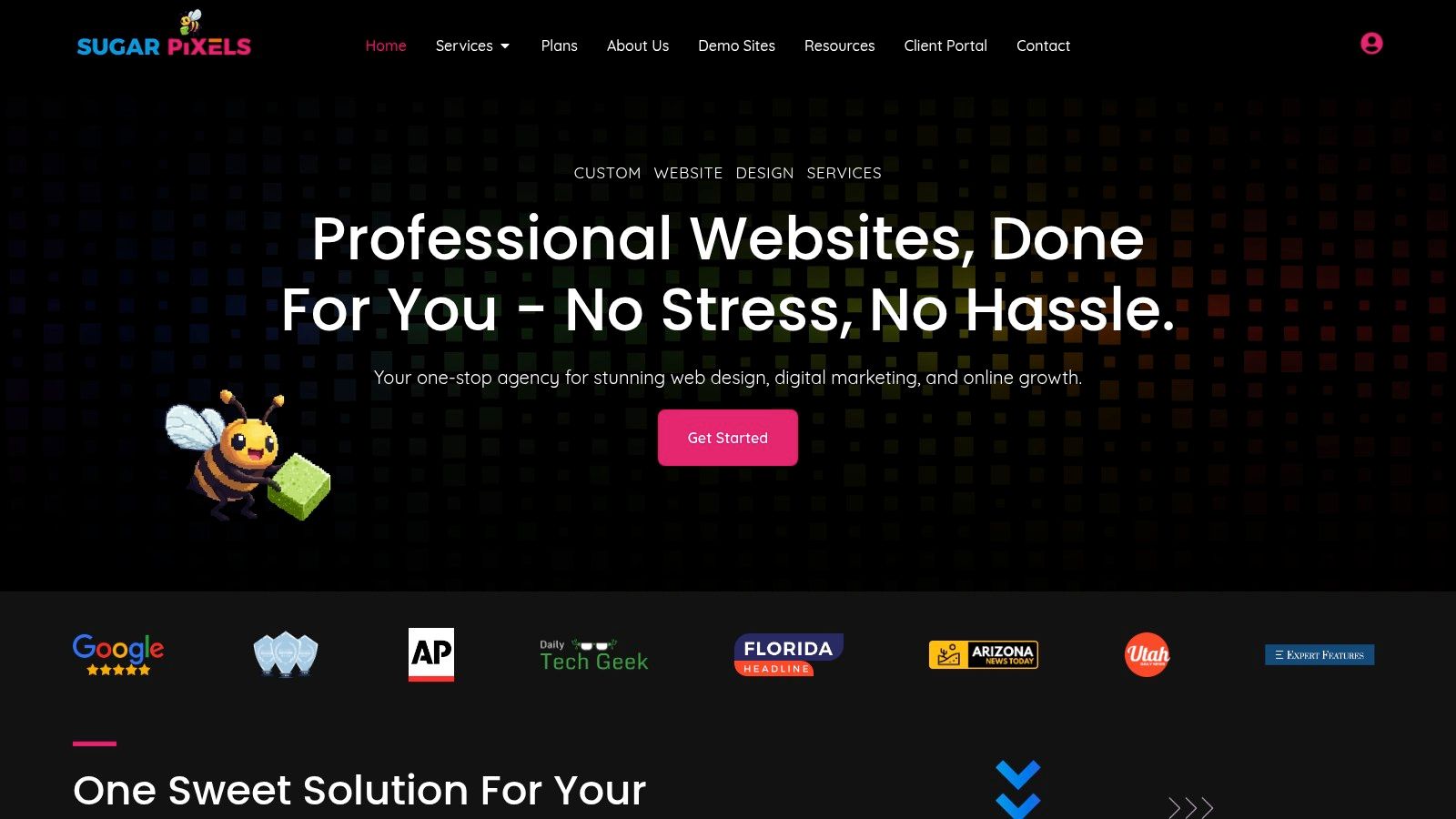
The platform’s core strength lies in its ability to pair creative design with measurable, results-driven features. This makes it an exceptional model among example business websites because it addresses the entire customer lifecycle. Instead of just delivering a static site, Sugar Pixels focuses on building a dynamic business asset that includes foundational SEO, email marketing funnels, and even affiliate program development to drive sustained growth.
Strategic Analysis: The All-in-One Advantage
Sugar Pixels' strategy is built on providing a frictionless, holistic digital partnership. By bundling essential services, they solve a major pain point for startups and small businesses: the complexity and cost of coordinating separate designers, developers, hosting providers, and marketers. This unified model ensures that every component of the digital strategy, from the initial design to post-launch marketing campaigns, works in harmony.
Key Takeaway: The most effective business websites are more than just digital brochures; they are integrated systems for growth. Sugar Pixels exemplifies this by building marketing capabilities like affiliate programs and email sequences directly into their service packages, ensuring sites are engineered for performance from day one.
Standout Features and Practical Applications
The agency’s offerings are structured to provide clarity and flexibility, catering to businesses at different growth stages.
- Integrated Service Suite: Combines custom design, reliable hosting (with SSL), e-commerce functionality, and on-page SEO. This is ideal for e-commerce entrepreneurs who need a robust storefront and the tools to market it effectively without technical headaches.
- Platform Flexibility: Offers development on major platforms like WordPress, Webflow, and Shopify, or a completely custom build. This allows businesses to choose the technology that best fits their long-term goals and operational preferences.
- Growth-Focused Add-ons: Unique services like affiliate program setup and email nurture sequences are included. This is a significant advantage for brands looking to leverage performance marketing and build loyal customer relationships from the outset.
- Transparent Tiered Pricing: Clear, upfront pricing with monthly and discounted annual options removes financial uncertainty. The plans (Growth Pop, Candy Cart Pro, Queen Bee) are designed to scale, allowing businesses to upgrade as their needs evolve.
Pricing Structure
Sugar Pixels offers transparent, subscription-based pricing to make professional web services accessible.
| Plan | Monthly Price | Setup Fee | Best For |
|---|---|---|---|
| Growth Pop | $49.99/mo | $49 | Startups & small service businesses (up to 7 pages) |
| Candy Cart Pro | $99.99/mo | $79 | E-commerce stores (up to 15 product listings) |
| Queen Bee | $199.99/mo | $99 | Enterprises & custom-feature builds |
Note: Annual billing offers approximately a 20% discount. Advanced features or additional pages may incur extra costs.
Actionable Insights for Your Business
Sugar Pixels provides a clear blueprint for businesses seeking a comprehensive digital partner. When evaluating a web design service, consider their ability to support your growth beyond the initial launch. The inclusion of marketing tools and ongoing maintenance is a critical factor for long-term success. Their model highlights the importance of choosing a partner who understands the full scope of building a successful online business. To see more detailed breakdowns, you can find a complete business website example on their site that showcases these principles in action.
- Pros:
- All-in-one service model avoids vendor management issues.
- Transparent, scalable pricing fits various business sizes.
- Focus on conversion and marketing, not just aesthetics.
- Flexible platform choices and fast 2-6 week delivery timelines.
- Cons:
- Advanced functionality may require custom quotes beyond standard plans.
- Does not guarantee specific SEO rankings or sales outcomes.
Website: https://www.sugarpixels.com
2. ThemeForest (Envato Market)
While not a single business website, ThemeForest is an indispensable starting point for inspiration and execution. It's a massive digital marketplace where you can explore thousands of example business websites in the form of pre-built themes and templates. Instead of just looking at finished sites, ThemeForest lets you see the architectural blueprints, helping you find a design that aligns perfectly with your business goals and technical requirements.
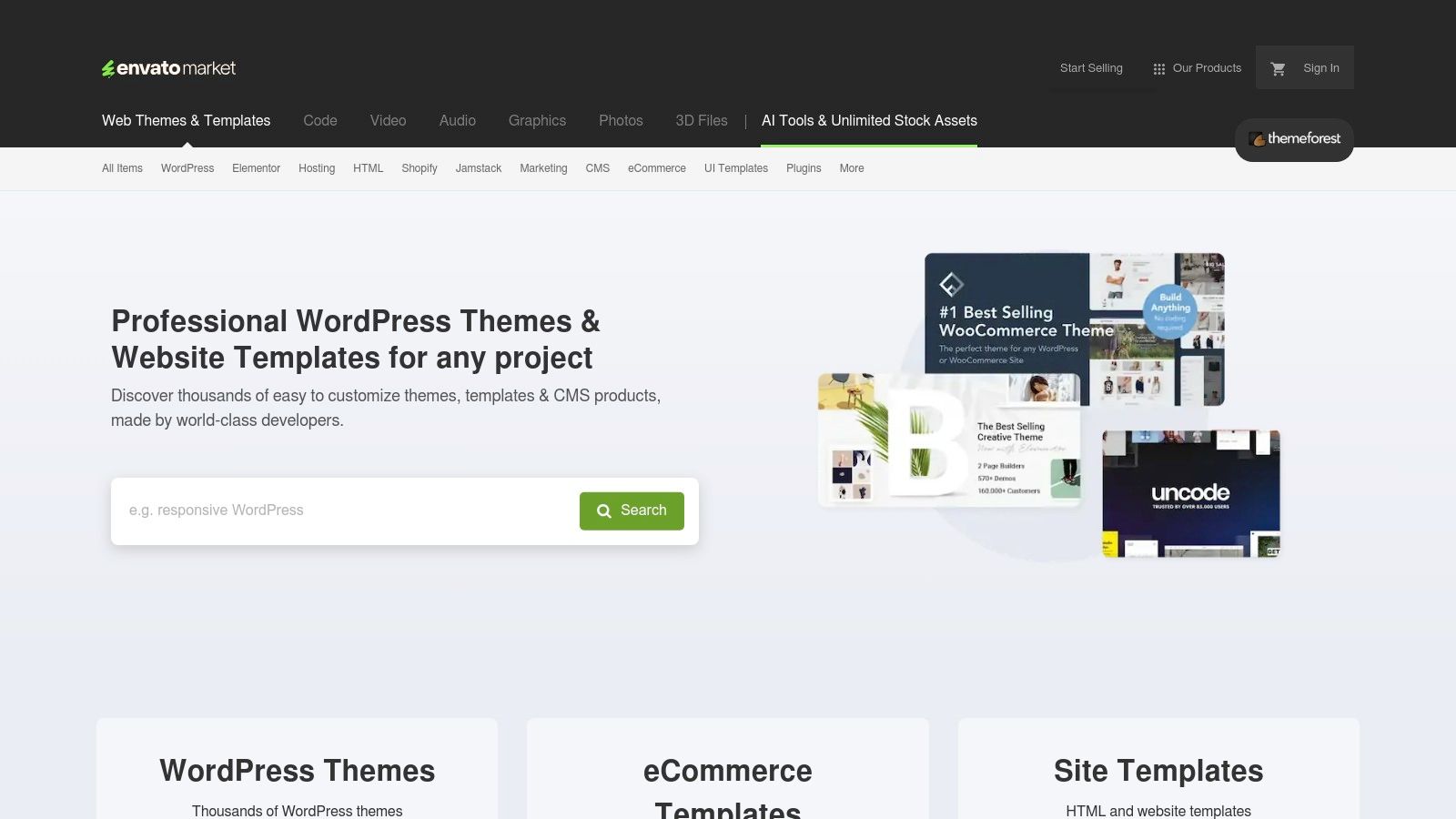
This platform stands out due to its sheer volume and diversity. Whether you need a sophisticated design for a corporate site on WordPress, a sleek portfolio on HTML, or a high-conversion layout for a Shopify store, you will find hundreds of options. Each theme comes with a live preview, allowing you to interact with a fully functional demo site. This feature is crucial for evaluating user experience, navigation flow, and mobile responsiveness before committing.
Strategic Breakdown & Key Takeaways
ThemeForest’s true value lies in its structured approach to theme evaluation. You can filter by technology (WordPress, Shopify, etc.), features (e.g., e-commerce, portfolio), and even specific plugins supported.
Key Conversion-Focused Insights:
- Social Proof: Every theme displays its sales count, user ratings, and comments. This built-in social proof helps you quickly identify popular, well-supported products.
- Feature-Rich Demos: Demos are not just static images; they are interactive examples showcasing every feature, from parallax scrolling to complex mega menus. This lets you visualize the customer journey.
- Clear Update History: Authors provide changelogs, showing a commitment to maintenance, security patches, and feature additions, which is vital for a long-term investment.
Technical & UX Considerations
- Pricing & Licensing: Themes are typically a one-time purchase (ranging from $19 to $79) with lifetime updates. A standard license covers use on a single end-product. Six months of author support is included, with an option to extend it for a fee.
- Quality Variance: The primary challenge is that quality can vary significantly between authors. It's essential to vet themes by checking recent reviews, support response times in the comments section, and the author's overall portfolio.
- User Interface: The marketplace interface is user-friendly, with powerful filters and sorting options (Best sellers, Newest, Top rated) that streamline the search process.
Pro Tip for Effective Use: Before buying, always test the theme’s live preview using Google’s PageSpeed Insights. A beautiful demo that scores poorly on performance can harm your SEO and user experience. Also, check the comments section for recent support queries to gauge the author's responsiveness.
At Sugar Pixels, we often use highly-rated ThemeForest templates as a foundational starting point for clients. This accelerates the development timeline while allowing us to focus on custom branding, feature integration, and performance optimization to create a unique and powerful digital presence.
3. Shopify Theme Store
For any e-commerce entrepreneur, the official Shopify Theme Store is a critical resource for high-quality example business websites tailored specifically for online retail. It is a curated marketplace of free and premium themes developed to meet Shopify's rigorous standards for performance, security, and feature integration. This guarantees that any theme you select will work seamlessly with Shopify’s core functionalities, like its secure checkout and advanced Storefront APIs.
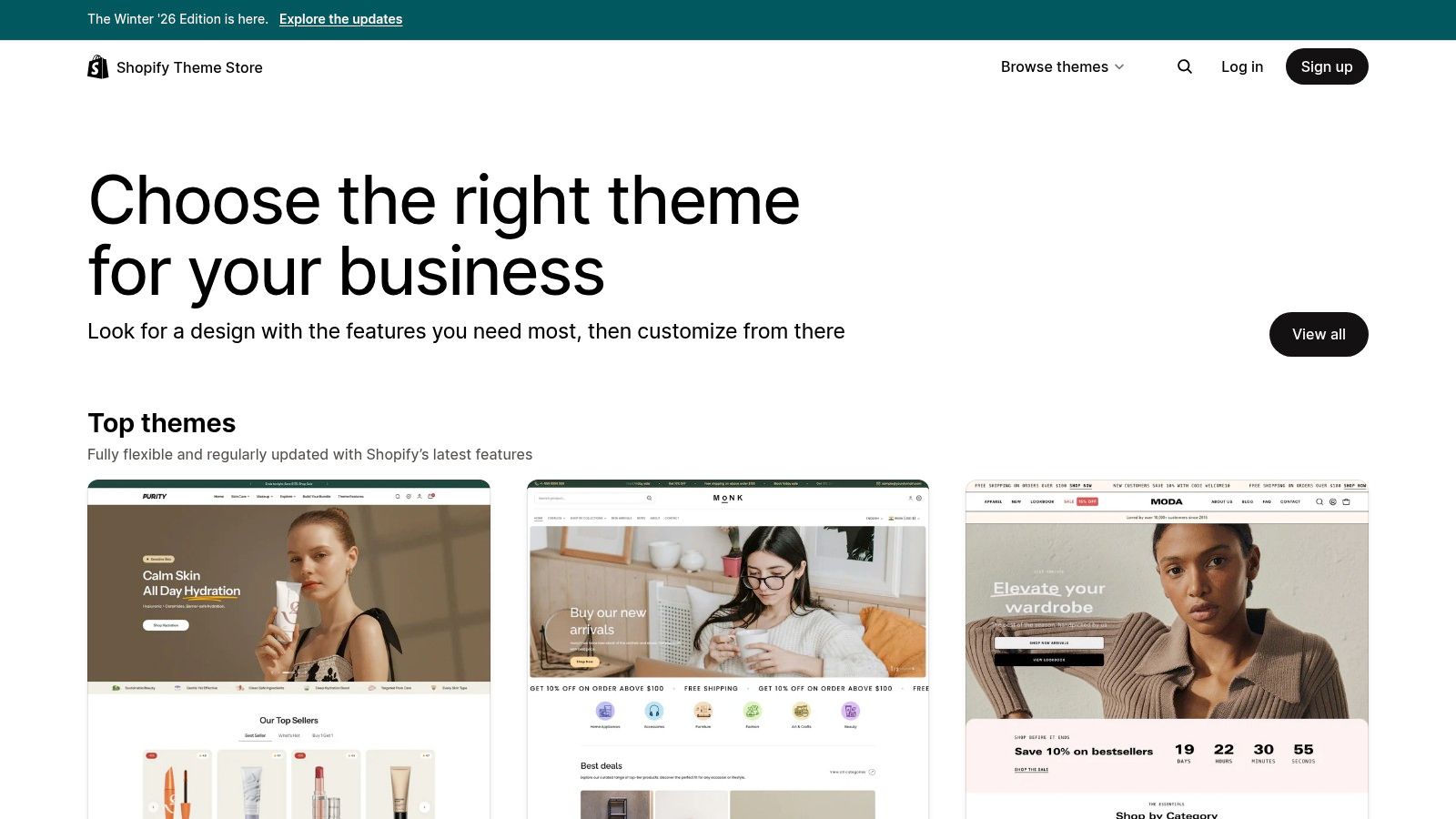
What makes the Shopify Theme Store stand out is its deep, native integration and quality control. Unlike general marketplaces, every theme here is purpose-built for commerce and is regularly updated to align with new Shopify features. The "try before you buy" model is a significant advantage, allowing merchants to install a premium theme on their store, customize it with their own products and branding, and only pay the one-time fee when they are ready to publish.
Strategic Breakdown & Key Takeaways
The Shopify Theme Store's value lies in its direct alignment with conversion-focused e-commerce best practices. Every theme is designed to guide customers from discovery to purchase efficiently.
Key Conversion-Focused Insights:
- Built-in Trust Signals: Themes are designed to integrate with Shopify’s native features like product reviews, dynamic checkout buttons, and trust badges, which are essential for building customer confidence.
- Optimized Product Pages: Demo sites showcase powerful product page layouts with features like high-res image zooms, variant swatches, and "quick add" functionality, all designed to reduce friction and encourage sales. For those utilizing these features, optimizing your imagery is critical; refer to this ultimate guide to Shopify product image size for best practices.
- Performance-Tested: Shopify speed-tests all themes, ensuring they provide a fast, responsive shopping experience. A quick-loading site directly impacts conversion rates and SEO.
Technical & UX Considerations
- Pricing & Licensing: Free themes are available, while premium themes typically range from $200 to $420. This is a one-time purchase per store, granting a lifetime license and ongoing updates from the developer.
- Quality Variance: While all themes meet a high baseline standard, designs and feature sets vary. Always check user reviews, view the demo store, and read the version history to ensure the theme meets your specific needs for catalog size and UX.
- User Interface: The marketplace is incredibly easy to navigate. You can filter themes by industry (e.g., "Art & Photography," "Food & Drink"), catalog size, and specific features like mega menus or sticky navigation.
Pro Tip for Effective Use: Use the theme trial period extensively. Upload your own products, set up your navigation, and test the entire user journey on both desktop and mobile. This helps you identify any potential limitations before you commit to purchasing the theme.
At Sugar Pixels, we consider the Shopify Theme Store the gold standard for e-commerce foundations. We often help clients select and customize a premium theme, then enhance it with custom code and app integrations to create a unique, high-performing storefront. To understand more about the foundational steps, you can learn how to create a business website with our detailed guide.
4. Webflow Templates (Webflow Marketplace)
For those seeking a middle ground between template-based simplicity and complete custom design, the Webflow Marketplace is an exceptional resource. It’s a curated collection of premium and free templates built specifically for the Webflow platform, a visual-first development tool favored for its design flexibility and powerful CMS. Viewing these templates offers a fantastic look into modern example business websites that prioritize clean aesthetics and sophisticated user interactions.
What sets the Webflow Marketplace apart is its tight integration with the Webflow Designer. You can preview any template not just as a live site but also directly within the Webflow editor. This unique "open in Designer" feature allows you to explore the backend structure, see how the CMS is configured, and understand the logic behind the animations and interactions before you even commit to a purchase. It's a transparent, hands-on approach to finding the perfect foundation for your site.
Strategic Breakdown & Key Takeaways
The Webflow Marketplace excels at showcasing templates that are conversion-focused and visually stunning right out of the box. The designs often reflect the latest trends in SaaS, portfolio, and high-end business websites, making it a goldmine for strategic inspiration.
Key Conversion-Focused Insights:
- Interaction-Led Storytelling: Many templates use subtle, on-scroll animations and micro-interactions to guide the user's attention toward key value propositions and calls to action, creating an engaging narrative.
- CMS-Driven Content: The best Webflow templates come with pre-configured CMS collections for blog posts, team members, services, or case studies. This demonstrates how to structure dynamic content for easy updates and scalability.
- Design System Clarity: Templates are built with style guides and global swatches, showing you how to maintain brand consistency across an entire site efficiently.
Technical & UX Considerations
- Pricing & Licensing: Templates have a one-time purchase fee, ranging from free to upwards of $129. A license allows use on a single project. This cost is in addition to a required Webflow site plan subscription.
- Learning Curve: While visually intuitive, Webflow has a steeper learning curve than traditional builders, especially when customizing complex interactions. The templates provide a great starting point, but significant changes may require some platform knowledge.
- User Interface: The marketplace is clean, modern, and easy to navigate. You can filter by category (e.g., Business, SaaS, Portfolio), price, and features. The ability to preview directly in the Designer is a significant UX advantage.
Pro Tip for Effective Use: Before purchasing a template, use the "View in Designer" option to inspect the Navigator panel. A well-organized, cleanly named element structure is a sign of a high-quality, professional build that will be much easier for you or your team to customize later.
At Sugar Pixels, we frequently leverage Webflow for clients who need a highly polished, custom-feel website without the overhead of traditional code. Starting with a premium template from the marketplace allows us to focus our efforts on strategic content, advanced CMS implementation, and bespoke interactions that align with our clients' unique brand identities.
5. Squarespace Templates
For businesses prioritizing design elegance and a seamless setup experience, the Squarespace Templates gallery is an exceptional resource. Unlike marketplaces, Squarespace offers a curated collection of templates as part of its all-in-one platform. This integrated approach means every design is optimized for its ecosystem, providing a polished starting point for personal brands, service-based businesses, and small e-commerce stores looking for example business websites that are both beautiful and functional right out of the box.
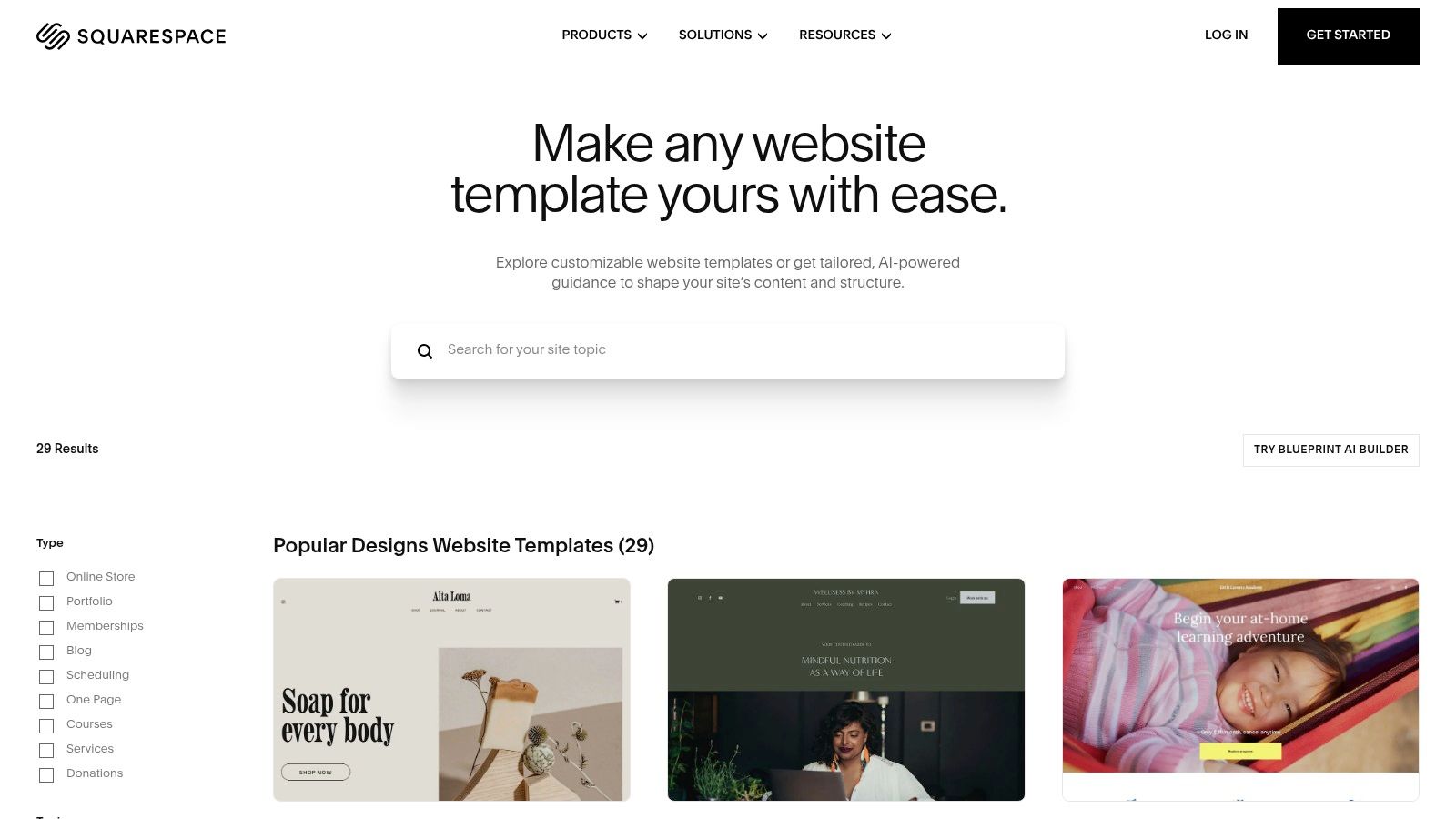
The platform shines with its design-forward, minimalist aesthetic. Each template acts as a fully functional demo site, allowing you to explore layouts, typography, and built-in features tailored to specific industries like photography, consulting, or online retail. Because Squarespace bundles hosting, SSL, and analytics, these templates provide a turnkey solution that dramatically reduces technical overhead and setup friction, letting you focus on content and brand presentation.
Strategic Breakdown & Key Takeaways
Squarespace's value is in its curated, high-quality design philosophy. It removes the guesswork of finding a reliable template by ensuring every option meets a high standard of visual appeal and mobile responsiveness. You can preview any template with your own branding and even use its AI tools to help generate initial site structure and text.
Key Conversion-Focused Insights:
- Integrated E-commerce: Templates designed for online stores come with pre-configured product pages, cart functionality, and checkout flows that are clean, secure, and optimized for conversions.
- Built-in Appointment Scheduling: Service-based business templates often integrate seamlessly with Squarespace Scheduling, allowing clients to book and pay for services directly on the site, which streamlines the lead-to-customer pipeline.
- Visually Driven Layouts: The templates emphasize strong hero imagery and clean typography, creating an immediate sense of professionalism and brand credibility that builds trust with visitors.
Technical & UX Considerations
- Pricing & Licensing: All templates are included for free with any paid Squarespace plan (starting around $16/month, billed annually). There are no separate template purchase fees, making it a predictable, all-inclusive subscription model.
- Quality Variance: Unlike a marketplace, the quality is consistently high and vetted by Squarespace. The main difference between templates is the layout and initial feature configuration, not the underlying code quality or support level.
- User Interface: The platform uses a user-friendly, section-based drag-and-drop editor. While it offers less granular control than a platform like Webflow, its intuitive interface makes it incredibly easy for non-developers to build a professional-looking site.
Pro Tip for Effective Use: Start by choosing a template from the category that most closely matches your business type (e.g., "Services," "Portfolio"). This ensures core functionalities like booking or galleries are already set up. Use the "Preview" feature to see how it looks on mobile, as Squarespace's mobile-first designs are a key strength.
At Sugar Pixels, we recommend Squarespace for clients who need a fast-to-market, visually stunning website without the complexity of custom development. We elevate the base template by implementing custom CSS for unique branding, integrating advanced marketing tools, and optimizing on-page SEO to ensure the site not only looks great but performs exceptionally well.
6. Wix Template Marketplace
For entrepreneurs and small businesses needing a rapid launch with minimal technical overhead, the Wix Template Marketplace is a powerhouse. It offers a vast library of professionally designed templates that serve as functional example business websites ready for customization. Unlike marketplaces selling standalone themes, Wix integrates its templates directly into an all-in-one, beginner-friendly website builder, bundling hosting, security, and support into a single package.
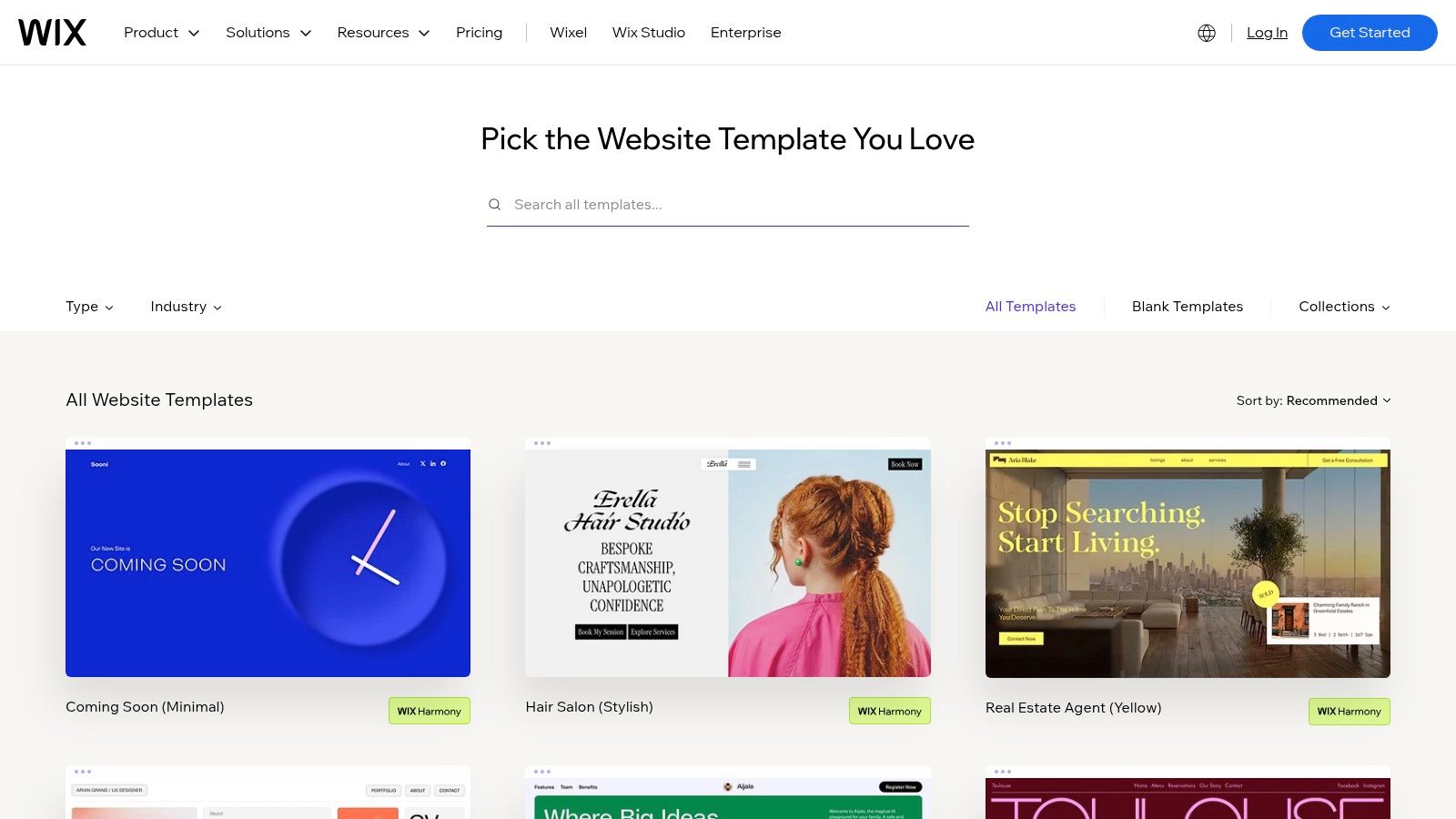
This platform excels by making sophisticated design accessible. You can browse hundreds of categories, from restaurants and online stores to consulting firms and personal portfolios, each with a live demo. Wix’s intuitive drag-and-drop editor allows users to modify every element without touching a line of code, while its AI-powered tools can even generate a basic site for you after a few questions. This integrated ecosystem is designed to remove friction and speed up the journey from idea to live website.
Strategic Breakdown & Key Takeaways
Wix's value proposition is its blend of design variety and usability, making it one of the best website builders for small business owners. The templates are not just visual shells; they are pre-configured with industry-specific features like booking systems for service businesses or galleries for photographers.
Key Conversion-Focused Insights:
- Industry-Specific Layouts: Templates come with pre-built sections relevant to the business type (e.g., menus for restaurants, service lists for consultants), guiding visitors toward key conversion actions.
- Built-in Calls-to-Action: Most designs strategically place CTAs like "Book Now," "Shop Now," or "Get a Quote" in high-visibility areas, providing a solid foundation for lead generation.
- Live Previews: The ability to explore a fully functional live demo helps you assess the user flow, mobile experience, and built-in apps before you even start building.
Technical & UX Considerations
- Pricing & Licensing: Templates are free to use with any Wix plan. You can start for free to build your site, but you must upgrade to a paid plan (starting around $17/month) to connect a custom domain, remove Wix ads, and access e-commerce features.
- Quality Variance: While all templates are professionally designed by Wix, their complexity and feature sets vary. Simpler designs are easier to customize, while more feature-rich ones might require more setup. A significant drawback is the difficulty in switching templates after your site is live, which often requires a full rebuild.
- User Interface: The Wix editor is highly visual and intuitive for beginners. The platform also offers 24/7 customer care with its paid plans, providing a safety net for those new to website management.
Pro Tip for Effective Use: Before choosing a template, clearly define your website's primary goal (e.g., generate leads, sell products, showcase a portfolio). Select a template from the category that most closely matches your goal, as it will come pre-loaded with the most relevant apps and page structures, saving you significant setup time.
At Sugar Pixels, we recognize the appeal of Wix for rapid deployment. We help clients who start on Wix by elevating their initial design with custom branding, advanced SEO optimization, and strategic app integrations to ensure their user-friendly site also performs at a professional level.
7. TemplateMonster
As a long-standing player in the digital marketplace space, TemplateMonster offers another vast library of example business websites presented as purchasable themes and templates. Like its competitors, it provides a comprehensive catalog where businesses can find inspiration and a functional foundation for their online presence. It serves as a valuable alternative marketplace, featuring different authors, unique design bundles, and a slightly different curation philosophy.
TemplateMonster distinguishes itself by covering an extensive range of platforms, from popular choices like WordPress and Shopify to more niche systems like Joomla, PrestaShop, and MotoCMS. This broad support makes it a go-to resource for businesses tied to specific technologies. Each product includes a live demo, allowing you to thoroughly explore the layout, responsiveness, and user journey before making a purchase, ensuring the final product will meet your strategic needs.
Strategic Breakdown & Key Takeaways
TemplateMonster's value proposition is its focus on providing a complete launch package, often bundling templates with essential plugins and even offering installation or customization services as add-ons. This approach appeals to business owners seeking a more streamlined, all-in-one solution.
Key Conversion-Focused Insights:
- Niche Industry Focus: The marketplace excels at providing themes for highly specific business verticals, such as "medical clinics" or "logistics companies," which often come pre-loaded with relevant industry-specific features and layouts.
- Bundled Value: Many products are offered as part of a bundle, including graphics, plugins, and sometimes even stock photos. This helps create a cohesive brand look right out of the box.
- Service Add-Ons: Users can purchase services like template installation, SEO optimization, and even hosting directly at checkout, simplifying the technical setup for non-technical founders.
Technical & UX Considerations
- Pricing & Licensing: TemplateMonster offers both individual theme purchases (typically $30-$99) and a subscription model called MonsterONE, which provides unlimited downloads for a recurring fee. Standard licenses cover a single end-product.
- Quality Variance: As with any large marketplace, the quality of code, documentation, and support varies significantly between different authors. It is crucial to check user ratings, read recent reviews, and inspect the live demos carefully.
- User Interface: The platform's interface is straightforward, with robust filtering options by platform, feature, color, and compatibility. This makes it easy to narrow down the thousands of available options to find the perfect fit.
Pro Tip for Effective Use: Pay close attention to the "Included Features" and "Requirements" sections on each product page. Some templates rely on specific premium plugins that may need to be purchased separately. Also, use the "Ask a Question" feature to clarify any doubts with the author before buying.
At Sugar Pixels, we leverage marketplaces like TemplateMonster to find unique design frameworks for clients with specific niche requirements. By starting with a specialized template, we can accelerate development while dedicating our resources to deep customization, performance tuning, and ensuring the final website is a powerful, high-converting asset.
Top 7 Business Website Templates Comparison
| Option | Implementation Complexity 🔄 | Resource & Speed ⚡ | Expected Outcomes ⭐ | Ideal Use Cases 💡 | Key Advantages 📊 |
|---|---|---|---|---|---|
| Sugar Pixels | Low for client (agency-managed); medium provider effort | Moderate recurring cost (from $49.99/mo); hosting & support included; 2–6 week launches | High — conversion-focused + marketing tools; no SEO/sales guarantees ⭐⭐⭐⭐ | Startups, growing SMBs, e‑commerce owners wanting an end-to-end partner | All-in-one delivery; platform flexibility; tiered pricing; post-launch maintenance |
| ThemeForest (Envato) | Medium–High (requires setup/customization; code quality varies) | Low upfront (one-time); support time-limited (6 mo); time depends on customization | Variable — outcome depends on theme author & customization ⭐⭐–⭐⭐⭐ | Developers, agencies, experienced builders seeking wide choice | Massive selection; lifetime updates; flexible licensing; low entry cost |
| Shopify Theme Store | Low–Medium (built for Shopify; easier to apply) | Moderate one-time theme cost ($200–$420+); deep Shopify integration; fast store launch | High for commerce readiness and compatibility ⭐⭐⭐⭐ | Shopify merchants needing polished, supported storefronts | Curated quality; platform-tested themes; native checkout & API integration |
| Webflow Templates | Medium–High (visual design freedom; learning curve for interactions) | Template cost + Webflow plan; designer-focused prototyping speed | High for modern design, interactions and CMS-driven sites ⭐⭐⭐⭐ | Designers, SaaS, portfolios, marketers who need custom interactions | Modern, conversion-focused designs; CMS & animation control; visual builder |
| Squarespace Templates | Low (turnkey, drag-and-drop; minimal setup) | Subscription includes hosting/SSL/templates; fast time-to-launch | Good for polished simple sites; limited deep customization ⭐⭐⭐ | Personal brands, service businesses, small e‑commerce with minimal custom needs | All-in-one platform; predictable pricing; minimal setup friction |
| Wix Template Marketplace | Low (very beginner-friendly with AI tools) | Low to start; hosting included; very fast launch | Good for small sites; platform limits may affect scale ⭐⭐⭐ | Small businesses, solo entrepreneurs, quick proof-of-concept sites | Broad template variety; approachable editor; 24/7 support |
| TemplateMonster | Medium (varies by CMS; vendor quality differs) | One-time purchases; add-ons/install help available; frequent discounts | Variable — depends on vendor and item quality ⭐⭐–⭐⭐⭐ | Buyers seeking niche templates or alternative marketplace options | Wide multi‑CMS catalog; extras and bundles; niche vertical coverage |
From Inspiration to Implementation: Your Next Steps
We've journeyed through a curated gallery of exceptional example business websites, dissecting the strategic choices that make them successful. From the sleek user experience of top e-commerce stores to the compelling narratives of personal brands, a clear pattern emerges: a great website is a purpose-built machine, not just a digital storefront. It's an engine for growth, meticulously designed to attract, engage, and convert visitors into loyal customers.
Throughout our analysis of templates and platforms from Shopify, Webflow, Squarespace, and beyond, we uncovered several core principles. A successful site seamlessly blends stunning visuals with intuitive functionality, guides users with clear calls-to-action, and is built on a technical foundation optimized for speed and search engine visibility. The best designs aren't just about aesthetics; they are about solving user problems and achieving business objectives.
Distilling Inspiration into a Strategic Blueprint
The next phase is translating these insights into a concrete plan for your own digital presence. Before you select a template or write a single line of code, it's crucial to define your primary goal. Are you focused on generating leads, driving direct sales, building a community, or establishing thought leadership? Your answer will shape every subsequent decision.
Consider the common threads we observed:
- Clarity Above All: Every high-performing website immediately answers three questions for the visitor: Who are you? What do you do? What should I do next?
- User-Centric Navigation: The best sites make it effortless for users to find what they need. Logical menus, clear labeling, and intuitive layouts reduce friction and improve engagement.
- Conversion-Focused Design: Strategic placement of CTAs, trust signals like testimonials and social proof, and streamlined checkout processes are not afterthoughts; they are integral to the design.
- Technical Excellence: Fast-loading pages, mobile-responsive design, and solid SEO fundamentals are non-negotiable for visibility and user satisfaction in today's digital landscape.
Choosing Your Platform and Path Forward
With your strategic goals defined, you can now select the right tools for the job. Your choice of platform is a critical one, as it dictates your level of flexibility, scalability, and ease of use.
For entrepreneurs and small businesses looking to get started quickly with minimal technical overhead, exploring the best no code website builders can significantly simplify the journey from concept to launch. Platforms like Squarespace and Wix, with their extensive template marketplaces, offer a fantastic starting point for building a professional and functional site.
For e-commerce ventures, the Shopify Theme Store provides a robust, integrated ecosystem built specifically for selling online. If you require deep customization and unique animations, the Webflow Marketplace offers unparalleled creative freedom. For those on a tight budget or with specific design needs, marketplaces like ThemeForest and TemplateMonster offer a vast library of options for various content management systems.
However, a template is just a starting point. The real magic happens when you infuse it with your unique brand identity, compelling copy, and strategic marketing integrations. This is where inspiration transforms into a high-performing business asset. The example business websites we've reviewed are powerful not just because of their initial design, but because they are living platforms continuously optimized for performance. Your goal should be the same: to create a website that not only launches successfully but also evolves with your business.
Feeling inspired but unsure how to translate these strategies into a website that truly performs? The team at Sugar Pixels specializes in transforming the best practices from top-tier example business websites into custom-built, goal-oriented digital experiences. We bridge the gap between inspiration and implementation, ensuring your site is not only beautiful but also engineered for growth. Schedule your free discovery call with Sugar Pixels today to start building your strategic online presence.