
In 2025, your website is more than just a digital brochure; it's your primary sales engine, customer service hub, and brand ambassador, all rolled into one. A high-performing site must flawlessly blend compelling aesthetics with intuitive user experience (UX) and robust technical performance, from SEO to loading speed. It’s a complex balance to strike, and simply looking at finished designs isn't enough to understand the strategy that makes them successful.
This guide moves beyond a simple gallery of pretty websites. We provide a strategic breakdown of diverse business website examples and inspiration platforms to reveal the "how" and "why" behind their effectiveness. For each resource, we dissect its purpose, target audience, key design choices, and the technology powering it. This approach delivers actionable takeaways you can apply directly to your own project, whether you're a startup founder, e-commerce entrepreneur, or enterprise-level marketer.
You will find a curated collection of platforms and templates that showcase what works right now. We include screenshots and direct links, making it easy to explore these examples firsthand. Our analysis also covers crucial conversion elements that transform visitors into customers. For instance, to truly grasp what defines a high-performing business website, it's important to understand what live chat support is, including its definition, benefits, and best practices for implementation.
Consider this your practical playbook for building a website that not only looks great but also achieves critical business objectives. Let's dive into the examples that set the standard for digital excellence.
1. Sugar Pixels
Sugar Pixels earns its place as a top-tier business website example not just for its own design, but for the comprehensive service it represents. It operates as a full-service digital agency, offering an all-in-one solution that takes businesses from concept to a fully managed online presence. This integrated approach is a significant advantage for companies that want to avoid juggling multiple vendors for design, development, hosting, and marketing, ensuring a cohesive and streamlined process from start to finish.
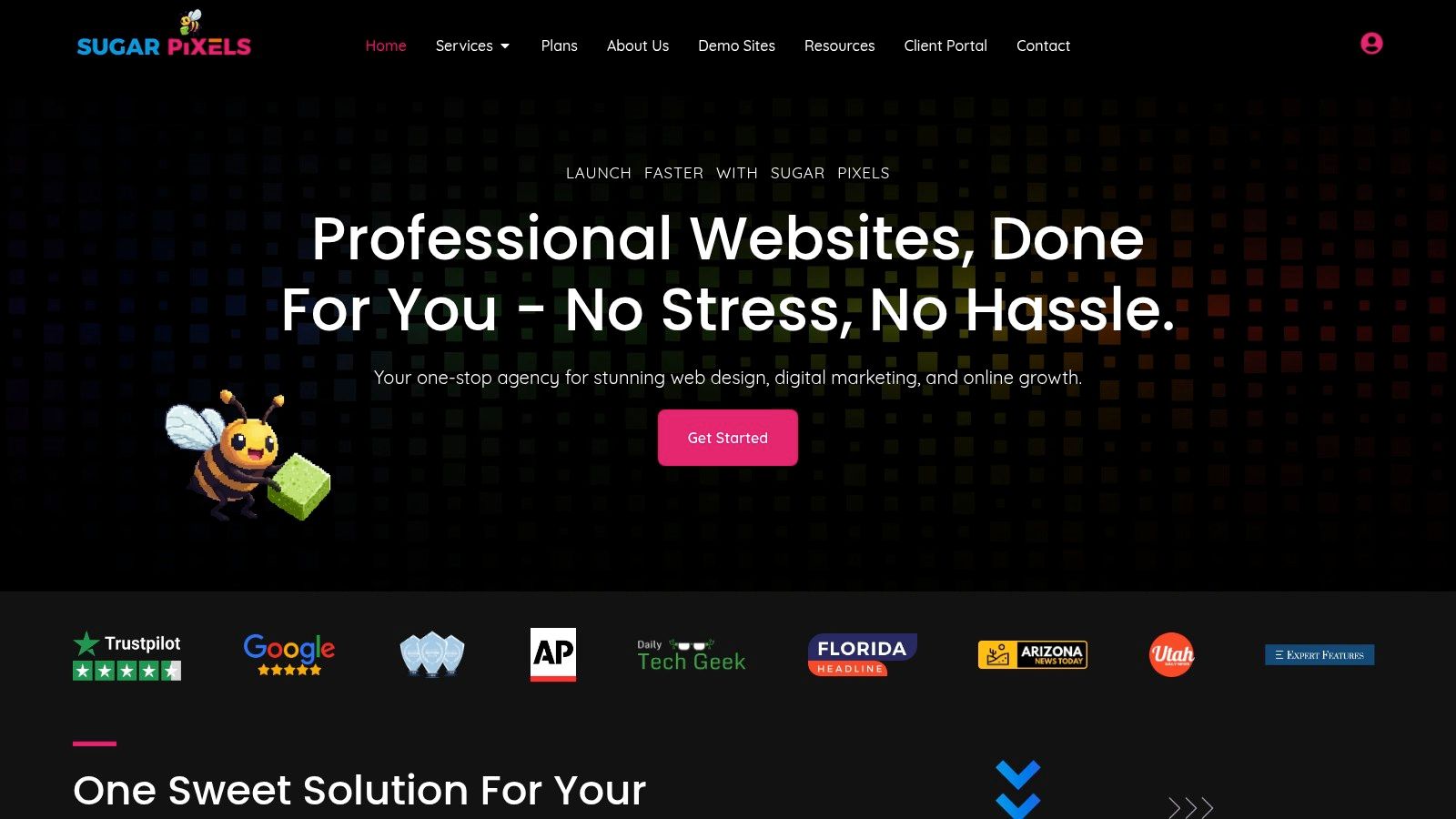
The agency’s website effectively communicates its value proposition through clean design, clear calls-to-action, and transparent pricing. This directness builds immediate trust with potential clients, from startups to enterprise-level organizations.
Key Strengths and Strategic Advantages
Sugar Pixels stands out by combining creative design with a robust technical and marketing backend. Their service stack is designed to address the entire lifecycle of a business website, making it a powerful partner for growth.
- All-in-One Service Model: They consolidate web design, reliable hosting, ongoing maintenance, SEO, and even email marketing under one roof. This synergy is a key differentiator, as it speeds up time-to-market and ensures all digital components work together seamlessly.
- Transparent and Scalable Pricing: One of the most common pain points in web design is opaque pricing. Sugar Pixels addresses this head-on with clearly defined, tiered plans. This structure allows businesses to start small and scale their investment as they grow, with predictable monthly or annual costs.
- E-commerce and Affiliate Program Specialization: Beyond standard business sites, the agency has deep expertise in building e-commerce stores and developing affiliate marketing programs. This specialized skill set is invaluable for businesses focused on direct sales and partner-driven growth, a feature rarely offered by agencies of this size.
Strategic Insight: By packaging services into clear, scalable tiers (Lite, Growth, Pro, and Queen Bee), Sugar Pixels effectively demystifies the web development process. This allows clients to self-select a starting point based on budget and needs, creating a frictionless sales funnel while establishing a clear path for future upgrades.
Technical and UX Breakdown
The agency’s own website serves as a portfolio piece, demonstrating a commitment to modern user experience and technical best practices. The user journey is logical, guiding visitors from service descriptions and pricing to portfolio examples and a free discovery call.
| Feature Analysis | Implementation & Benefit |
|---|---|
| Platform Flexibility | Builds on WordPress, Webflow, Shopify, or custom code. This flexibility ensures the final product is built on the right technology for the client's specific goals, not limited by the agency's preference. |
| Tiered Support | Offers support levels from email to priority VIP chat. This acknowledges that different clients have different needs for responsiveness and hands-on assistance. |
| KPI-Focused Approach | Emphasizes measurable outcomes like traffic, engagement, and conversions. This shifts the conversation from just aesthetics to tangible business results. |
Actionable Takeaways for Your Business
- Bundle Your Services: If you offer multiple related services, present them as a cohesive, all-in-one solution. This simplifies the decision-making process for customers and increases the total value of each client relationship.
- Be Transparent with Pricing: Display clear pricing tiers on your website. This builds trust and pre-qualifies leads, ensuring the people who contact you are already comfortable with your price points. Explore the detailed breakdown of how Sugar Pixels provides another great business website example and see how they structure their offerings.
- Create Clear Upgrade Paths: Design your service offerings so that a customer can easily move from a basic plan to a more advanced one. This strategy supports long-term client retention and scales revenue as your clients' businesses grow.
Website: https://www.sugarpixels.com
2. Awwwards
Awwwards isn't a single business website, but rather a professional web design and development competition platform. It serves as a curated gallery, showcasing the world's most innovative and technically impressive websites. For any business owner or marketing manager, it's an essential resource for inspiration and for benchmarking what's possible in modern web design.
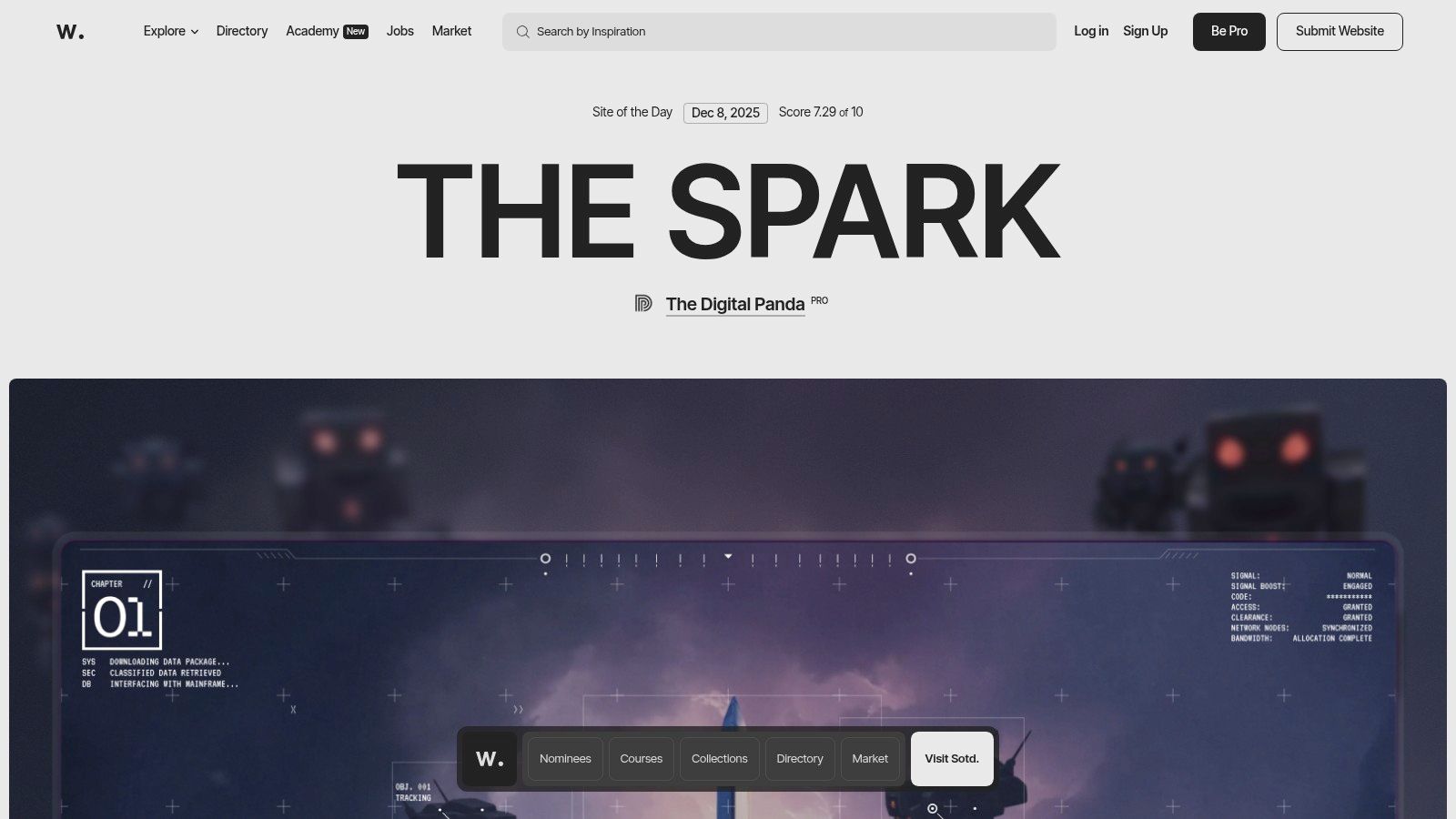
This platform provides an unparalleled look into cutting-edge business website examples, allowing you to see what top-tier agencies are creating for their clients. It's a place to discover new trends, see novel user interface patterns, and understand the high-end of digital branding. The quality of curation is extremely high, as sites are judged by a panel of international experts on design, usability, creativity, and content.
Strategic Analysis & Key Features
The primary value of Awwwards for a business is its powerful filtering and categorization system. You aren't just browsing random beautiful sites; you can drill down to find exactly what you need.
- Deep Filtering: You can filter submissions by industry (like "Business & Corporate"), technology (like Shopify or Webflow), country, color palette, and even specific typography. This makes it easy to find relevant examples in your niche.
- Award Tiers: The site recognizes "Site of the Day," "Site of the Month," and "Site of the Year," creating a clear hierarchy of excellence. This helps you focus on the absolute best-in-class examples.
- Professional Development: Beyond just inspiration, Awwwards offers Awwwards Academy courses and Pro/Creative Pass plans for teams looking to upskill in design and development.
Strategic Takeaway: Use Awwwards not just for visual inspiration, but as a competitive analysis tool. Search for websites in your industry to see what the most highly-awarded players are doing with their digital presence, user flow, and interactive elements. The site is a masterclass in demonstrating exceptional user experience design best practices.
How to Use Awwwards for Your Business
To get the most out of the platform, approach it with a clear goal. Don't just browse aimlessly.
- Define Your Goal: Are you looking for a new homepage layout, an innovative navigation menu, or a compelling "About Us" page? Start with a specific component in mind.
- Use Filters Intelligently: Start broad with your industry category (e.g., "Real Estate"), then narrow down by tags like "minimal," "corporate," or "storytelling" to refine your search.
- Analyze, Don't Copy: When you find a site you like, don't just look at the visuals. Analyze the user journey. How do they guide you to their primary call-to-action? What makes their micro-interactions engaging?
While the core gallery is free to browse, more advanced features, directory listings, and educational content require a paid plan, starting with the Creative Pass and scaling up for Pro agency accounts. Be aware that the sites featured here often have significant budgets, but the principles of good design and user experience they demonstrate can be adapted for almost any project.
Website: https://www.awwwards.com/
3. One Page Love
One Page Love is a highly focused, curated gallery dedicated exclusively to one-page websites, landing pages, and single-page applications. For businesses looking to create high-impact, conversion-focused digital experiences, this platform is an invaluable resource. It strips away the complexity of multi-page sites to showcase the art of concise storytelling and clear calls-to-action.
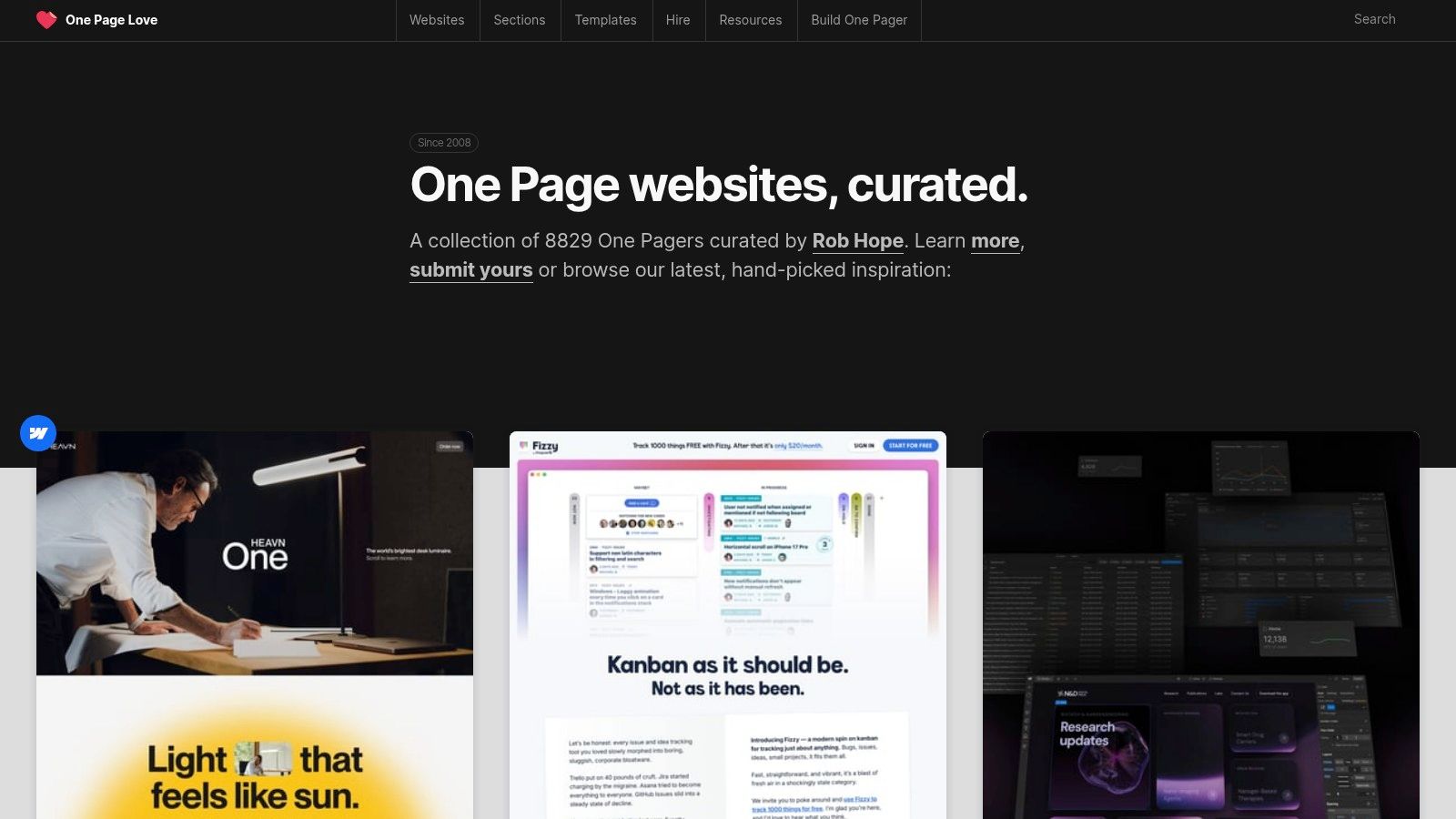
This platform is the ideal starting point for anyone designing a SaaS product page, a marketing campaign landing page, or a simple portfolio site. By focusing on a single format, One Page Love provides a masterclass in content hierarchy, user flow, and persuasive design within a constrained space. The curation emphasizes clarity, creativity, and effectiveness, making it a goldmine of actionable ideas for lean and impactful business website examples.
Strategic Analysis & Key Features
The core value of One Page Love is its tight niche focus, which allows for a deep dive into a specific, high-value website format. Its features are designed to help you find inspiration and resources quickly.
- Niche Curation: The gallery contains only one-page websites. This singular focus makes it the best place to study layouts designed for a single, primary objective, such as lead generation or product sales.
- In-Depth Categories: You can filter examples by specific site types like "App," "Portfolio," "SaaS," or "Wedding," and by tags like "Minimalist" or "Bold." This helps you find relevant designs for your exact project needs.
- Templates & Resources: Beyond inspiration, the site offers a marketplace of one-page templates and a popular newsletter that delivers fresh examples and design trends directly to your inbox.
Strategic Takeaway: Use One Page Love to master the art of information hierarchy. Analyze how the best examples guide users down the page, logically sequencing information from headline to social proof to the final call-to-action. This is a crucial skill for crafting high-converting experiences and understanding landing page design best practices.
How to Use One Page Love for Your Business
To leverage this platform effectively, approach it with a specific conversion goal in mind. Its strength lies in providing solutions for focused marketing objectives.
- Identify Your Conversion Goal: Are you trying to capture emails, sell a single product, or drive app downloads? Your goal will determine which examples are most relevant.
- Analyze Section Flow: Look at how different sites structure their content. Pay close attention to the order of sections: a hero section, followed by features, testimonials, pricing, and a final CTA is a common and effective pattern.
- Study the "Why": For each example, ask why the designer made certain choices. Why is that button that color? Why is the testimonial placed there? This deconstruction is key to learning.
Browsing the gallery is completely free. One Page Love also offers premium templates for sale and a submission process for designers to get their work featured; after a free review and acceptance, a fee is required for the final showcase. This model ensures a steady stream of high-quality, relevant business website examples for users to study.
Website: https://onepagelove.com/
4. Webflow Templates
The Webflow Templates marketplace isn't a single website but a curated collection of premium, production-ready website designs. It's an invaluable resource for businesses that want a high-end, custom look without the cost and timeline of building from scratch. This platform is ideal for teams wanting powerful design control through a visual editor, bypassing the need for manual coding.
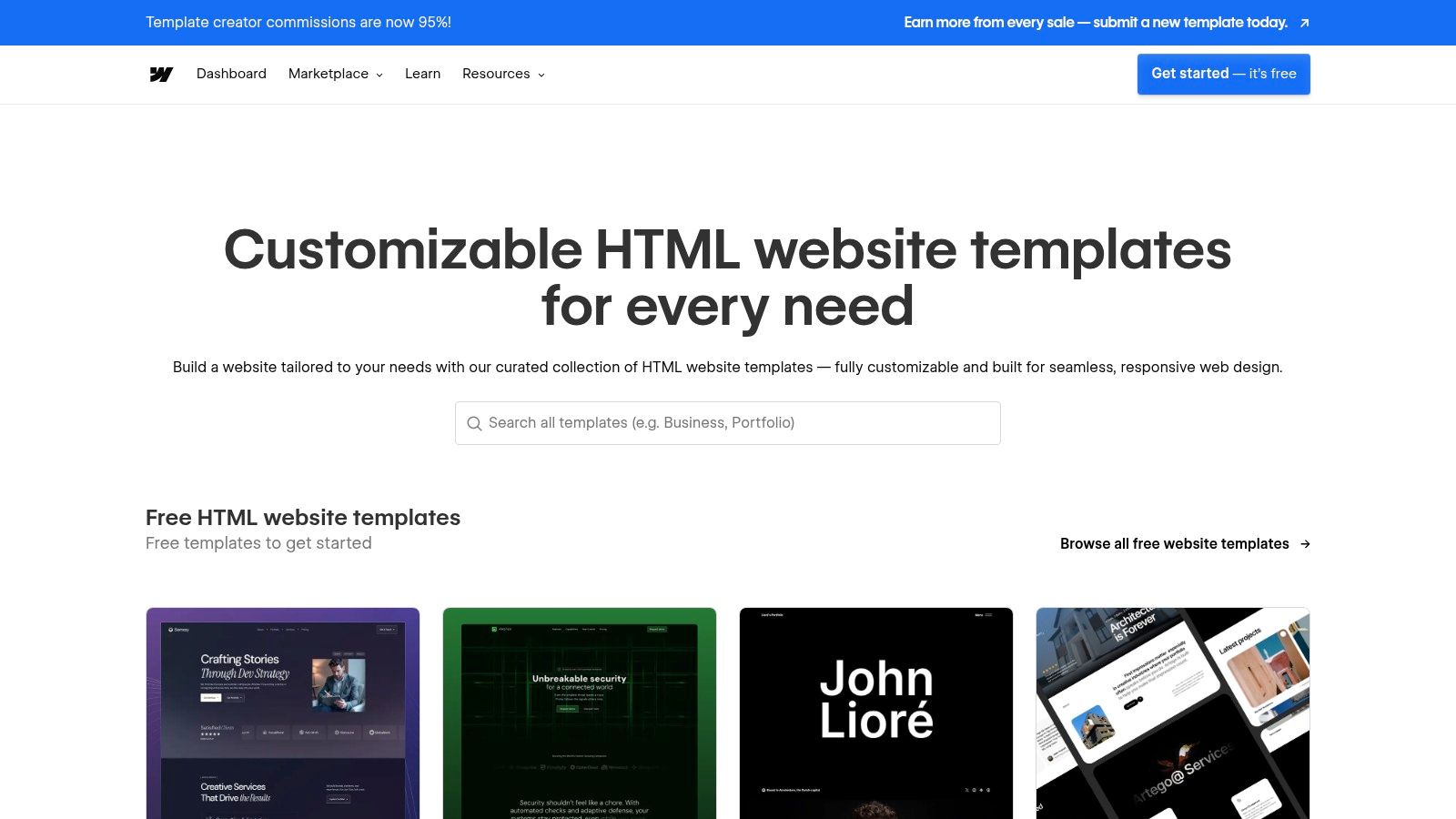
This marketplace provides a shortcut to world-class design, showcasing templates built by professional agencies and designers specifically for the Webflow platform. It’s a perfect middle ground between restrictive website builders and complex custom development. Businesses can find modern, responsive, and performance-optimized business website examples that are ready to be customized with their own branding, content, and imagery.
Strategic Analysis & Key Features
The primary advantage of the Webflow Templates marketplace is its combination of aesthetic quality and technical flexibility. You are not just buying a design; you're buying a fully functional starting point within a powerful development environment.
- Business-Focused Categories: The marketplace is neatly organized into practical categories like "SaaS," "Startup," "Agency," and "Corporate," making it simple to find templates designed for specific business models and goals.
- Live Previews & Designer Access: Every template offers a comprehensive live demo. Even more powerfully, you can open a read-only version of the template directly in Webflow's Designer to inspect its structure, styling, and responsiveness before purchasing.
- Built-in CMS and Ecommerce: Many templates come with pre-configured Content Management System (CMS) collections for blogs, portfolios, or team members, as well as fully integrated ecommerce functionality, saving immense setup time.
Strategic Takeaway: Use the Webflow Templates marketplace to drastically accelerate your go-to-market timeline. Instead of starting the design process from zero, select a template that is 80% aligned with your vision and use Webflow's visual editor to customize the remaining 20% to perfect your brand identity and user flow.
How to Use Webflow Templates for Your Business
To leverage the marketplace effectively, focus on functionality and structure over superficial elements like colors and images, which are easily changed.
- Identify Core Functionality: Determine your non-negotiable features first. Do you need a blog (CMS), an online store (Ecommerce), or complex pricing tables? Use these needs to filter your template search.
- Inspect the Structure: Use the "Open in Designer" feature to analyze the template's build quality. Check the Navigator panel to see how sections are organized and ensure the class naming is logical. A well-structured template is easier to customize.
- Test Responsiveness: In the live preview, thoroughly test the template on different screen sizes (desktop, tablet, and mobile). A high-quality template will provide a flawless experience across all devices.
Templates are a one-time purchase, with prices typically ranging from $49 to $149. However, to launch your site, you will also need a Webflow hosting plan, which is a separate subscription. While there is a learning curve for newcomers to the Webflow platform, the templates provide a massive head start.
Website: https://webflow.com/templates
5. Shopify Theme Store
The Shopify Theme Store is the official marketplace for e-commerce website templates built exclusively for the Shopify platform. Unlike a general-purpose gallery, it’s a highly functional resource for entrepreneurs and businesses focused on direct-to-consumer sales. It provides a foundational blueprint for what a high-converting online store should look and feel like, making it an invaluable starting point for anyone in retail.
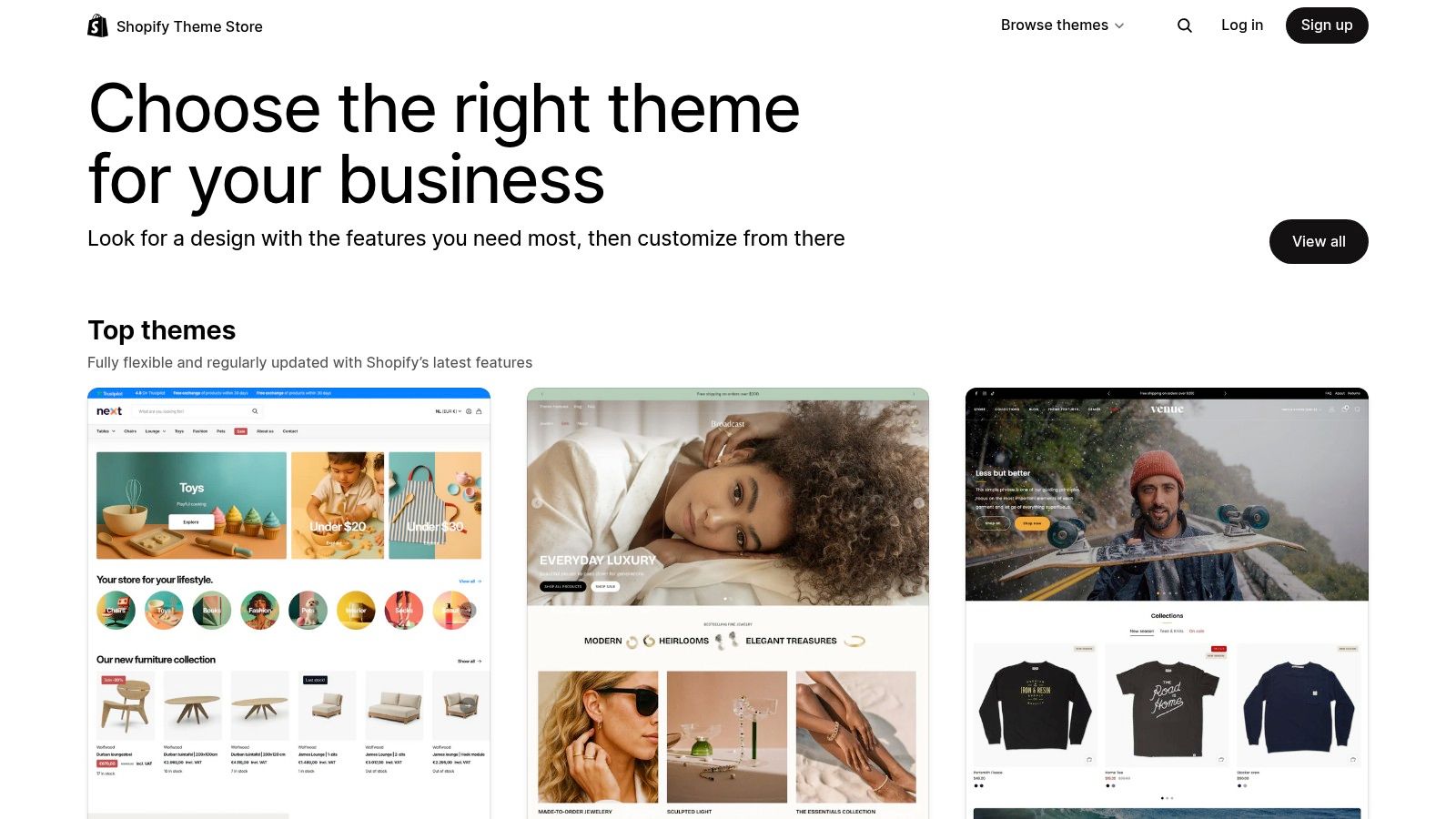
This platform is more than just a collection of pretty designs; it’s a curated library of business tools. Every theme is vetted by Shopify for quality, performance, and compatibility, ensuring a stable and secure foundation. For business owners, this eliminates much of the technical guesswork, allowing them to focus on product and marketing rather than backend development. It offers some of the most practical business website examples for e-commerce ventures.
Strategic Analysis & Key Features
The primary value of the Shopify Theme Store is its laser focus on commerce-centric functionality. Each theme is built to drive sales, and its features are clearly presented to help merchants choose the right tool for their specific business model.
- Commerce-Specific Filtering: Users can filter themes by catalog size, industry (e.g., "Home & Garden," "Food & Drink"), and specific features like "quick buy," "in-store pickups," and "age verifier." This allows businesses to find a template that directly supports their operational needs.
- Live Demo Stores: Every theme includes a fully functional live demo store. This allows you to experience the user journey from a customer's perspective, testing everything from product page layouts to the checkout flow before making a purchase.
- Vetted Developer Ecosystem: The marketplace includes free themes developed by Shopify and premium themes from approved third-party developers. This curated approach ensures high standards for code quality, regular updates, and access to developer support.
Strategic Takeaway: Use the Shopify Theme Store as a feature-discovery tool for your e-commerce strategy. Analyze the feature sets of top-rated themes in your niche to understand what functionalities are standard for a modern online store, such as advanced product filtering, cross-selling sections, and integrated lookbooks.
How to Use the Shopify Theme Store for Your Business
To maximize the value of the Theme Store, go beyond aesthetics and evaluate themes based on your business goals and customer profiles.
- List Your "Must-Have" Features: Before browsing, list the core functionalities your store needs. Do you require extensive product variant options, a subscription model, or robust lookbook capabilities? This list will be your guide.
- Test Live Demos on Mobile: With the majority of e-commerce traffic coming from mobile devices, it’s crucial to test the live demo on your phone. Assess the navigation, product discovery, and checkout process to ensure it's seamless and intuitive.
- Read Reviews and View Real Stores: Check the reviews for insights from other merchants. More importantly, look at the "View stores" examples to see how real businesses have customized the theme. This provides a realistic picture of the theme's flexibility.
While Shopify offers excellent free themes like "Dawn," premium themes range from approximately $200 to $400 as a one-time purchase. This cost is separate from your monthly Shopify subscription and any apps you may add. Remember that while themes are customizable, extensive modifications may require hiring a Shopify developer.
Website: https://themes.shopify.com/
6. Wix Business Website Templates
Wix offers a different starting point than a bespoke agency-built site. It's a platform that provides a massive gallery of business templates paired with an intuitive visual builder, making it an accessible entry point for small businesses, startups, and solo entrepreneurs. For those needing to launch quickly and affordably, Wix provides a structured yet customizable foundation.
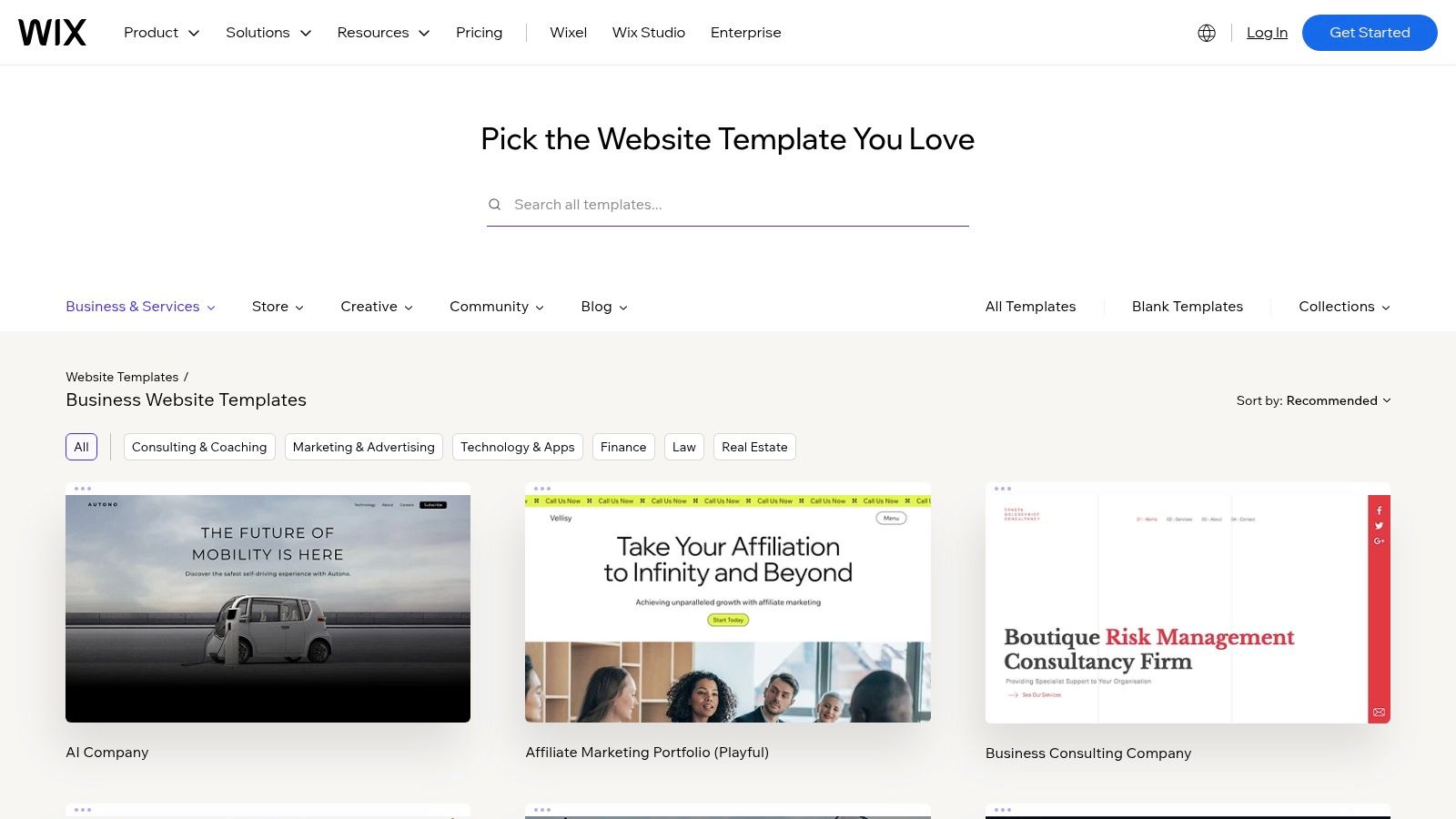
This platform excels at providing industry-specific solutions out of the box. Whether you run a consulting firm, a real estate agency, or a local service business, you can find a template designed with your core needs in mind. This approach demystifies the web design process, allowing business owners to focus on content and branding rather than complex code or technical configurations.
Strategic Analysis & Key Features
Wix’s primary value lies in its combination of speed, accessibility, and integrated business tools. It’s an all-in-one ecosystem designed to get a small business online and operational with minimal friction.
- Industry-Specific Templates: With hundreds of templates categorized by niche (like "Consulting & Coaching" or "Services & Maintenance"), you start with a layout that is already 80% of the way there.
- Integrated Business Apps: Wix isn't just a site builder; it includes built-in applications like Wix Bookings for appointments, Pricing Plans for subscriptions, and Forms for lead capture, which are essential for service-based businesses.
- Drag-and-Drop Editor: The platform’s visual editor allows for easy customization without needing to write any code. You can change colors, fonts, layouts, and add new sections visually.
Strategic Takeaway: Use Wix as a rapid deployment tool. For new businesses or specific marketing campaigns, the ability to select a relevant template, customize it with your branding, and launch in a matter of hours is a significant competitive advantage. It's a prime example of how to build a professional business website without a large upfront investment.
How to Use Wix for Your Business
To get the most out of Wix, approach its template gallery with a clear business function in mind.
- Filter by Your Industry: Start by browsing the templates designed specifically for your business type. This ensures the foundational structure, like service pages or booking systems, is already in place.
- Focus on Functionality First: Before getting lost in visual tweaks, ensure the template you choose supports the core functions you need. If you need online appointment scheduling, prioritize templates that integrate seamlessly with Wix Bookings.
- Use the Free Plan to Experiment: You can start building and customizing your site entirely for free. This allows you to fully test the editor and features before committing to a paid plan, which is required to connect a custom domain and remove Wix ads.
While Wix is incredibly user-friendly, businesses anticipating massive e-commerce scale or requiring deep custom development might find platforms like Shopify or Webflow more suitable. However, for the vast majority of small to medium-sized businesses, Wix provides a powerful and cost-effective solution. Paid plans are required for professional features, starting with basic domain connection and scaling up to full e-commerce and marketing suites.
Website: https://www.wix.com/website/templates/html/business
7. ThemeForest (Envato Market)
ThemeForest is a massive digital marketplace, part of the Envato Market ecosystem, offering an enormous library of website themes and templates. For businesses, especially those on a budget or needing a quick launch, it's an invaluable resource for finding pre-designed website foundations for platforms like WordPress, Shopify, Webflow, and more. It functions less as a single example and more as a vast catalog of possibilities.
This platform provides a practical starting point by showcasing thousands of functional business website examples that you can purchase and customize. Unlike pure inspiration sites, every design on ThemeForest is a purchasable product with a live demo, allowing you to interact with the user interface, test responsiveness, and see features in action before committing. This direct access to market-ready designs makes it a highly efficient tool for startups and small businesses.
Strategic Analysis & Key Features
ThemeForest's primary strength lies in its sheer volume and powerful search functionality, which lets you zero in on themes that meet specific technical and aesthetic requirements. It democratizes web design by making professional-looking templates accessible and affordable.
- Vast Selection & Filtering: You can filter themes by platform (e.g., WordPress), category (corporate, retail), features (e.g., parallax scrolling), and compatible plugins (e.g., WooCommerce). You can also sort by best sellers, top-rated, or newest additions.
- Live Previews & Demos: Almost every theme offers a live demo, which is a fully functional version of the website. This is crucial for evaluating the user experience, navigation flow, and overall feel of the site before buying.
- Community Reviews & Support Data: Each theme displays sales numbers, buyer ratings, user comments, and the author's support history. This social proof is critical for vetting the quality and reliability of a theme and its developer.
Strategic Takeaway: Use ThemeForest as a tool for rapid prototyping and market validation. Instead of spending thousands on a custom design upfront, you can find a high-quality, best-selling theme in your niche for under $100 to launch quickly, test your messaging, and gather user feedback.
How to Use ThemeForest for Your Business
To leverage ThemeForest effectively, you need a methodical approach to cut through the noise and find a high-quality, reliable theme.
- Prioritize Recent Updates & High Ratings: Focus on themes that have been updated recently (to ensure compatibility and security) and have a large number of sales combined with a high average rating (4.5 stars or above).
- Scrutinize the Live Demo: Don't just look at the homepage. Click through every page, test the contact forms, check the mobile and tablet views, and analyze the site speed. Does it feel professional and intuitive?
- Read the Comments and Support Section: Look at the comments section for the theme. Are previous buyers happy? More importantly, how does the author respond to support requests? Responsive and helpful support is a non-negotiable factor.
Most themes are a one-time purchase, typically ranging from $29 to $79, which usually includes 6 months of support from the author. Be aware that the quality can vary significantly between authors, so due diligence is essential. While a theme provides a strong foundation, you will still need to invest time in customization and content creation.
Website: https://themeforest.net/
Top 7 Business Website Examples Comparison
| Option | 🔄 Implementation complexity | ⚡ Resource requirements | 📊 Expected outcomes | 💡 Ideal use cases | ⭐ Key advantages |
|---|---|---|---|---|---|
| Sugar Pixels | Moderate→High: managed agency process with custom options | Budget tiers ($15–$200+/mo + setup); minimal in‑house dev; 2–6 week timeline | Conversion‑focused sites, SEO, e‑commerce, affiliate program setup; KPI tracking | Startups, growing businesses, e‑commerce & affiliate programs needing an all‑in‑one partner | All‑in‑one stack, platform flexibility (WordPress/Webflow/Shopify/custom), tiered support |
| Awwwards | Low to browse; high to replicate award‑level builds | Time for research; some paid courses/tools (Pro/Creative Pass) | Benchmarks for best‑in‑class UX/UI and cutting‑edge trends | Designers, agencies benchmarking top‑tier UX/UI and upskilling | Highly curated, rich filtering and training resources |
| One Page Love | Low to browse; low→moderate to build/implement | Minimal dev for one‑pagers; templates available; focused content work | High‑converting landing/pricing pages with clear content hierarchy | Landing pages, SaaS campaigns, short sales funnels | Focused one‑page examples, conversion‑centric layouts, fresh templates |
| Webflow Templates | Low if familiar with Webflow; moderate learning curve otherwise | Template cost + Webflow hosting; visual editor time investment | Production‑ready, responsive business sites customizable without hand‑coding | Teams wanting visual design control (agencies, startups, SaaS) | Polished, practical templates with live demos and visual editing |
| Shopify Theme Store | Low to deploy; moderate if heavy customization needed | Theme cost + Shopify subscription + app costs; commerce resources | Stable, commerce‑optimized stores maintained for Shopify updates | Retail, DTC ecommerce businesses | Official ecosystem, commerce features, developer support and previews |
| Wix Business Templates | Very low: visual editor for quick builds | Free trial; upgrade for domain/e‑commerce; minimal technical staff | Fast launches for small businesses; good SMB feature coverage | Small businesses, solo founders, service providers | Easy to adapt templates, built‑in apps for SMB needs |
| ThemeForest (Envato) | Varies widely by author; selection & vetting required | Low upfront prices; may need plugins/developers; cross‑platform options | Wide choice of platform templates; quality varies by item | Teams seeking budget templates or cross‑platform options | Massive catalog, competitive pricing, visible ratings & changelogs |
Turning Inspiration Into Your Next High-Converting Website
We've explored a diverse landscape of exceptional business website examples, from the curated galleries of Awwwards and One Page Love to the powerful template ecosystems of Webflow, Shopify, and Wix. This journey wasn't just about admiring beautiful designs; it was about deconstructing what makes a website truly effective and understanding the strategic decisions that drive user engagement and business growth.
Across these varied examples, a few core principles consistently emerged as the foundation of a successful digital presence. These are the non-negotiable elements that transform a simple online brochure into a high-performing business asset.
Key Themes from the Best Website Examples
- Clarity Above All: The most effective websites communicate their value proposition instantly. From the moment a user lands, they understand who the business is, what it offers, and who it serves. This is achieved through concise headlines, intuitive navigation, and a logical flow of information.
- User-Centric Navigation: Whether it's a minimalist single-page layout or a complex e-commerce store, the user's journey is always prioritized. The best examples make it effortless for visitors to find what they need, guiding them toward key actions without friction or confusion.
- Purposeful Calls-to-Action (CTAs): Every successful website has a goal, and prominent, compelling CTAs are the tools used to achieve it. From "Buy Now" to "Book a Demo," these action-oriented prompts are strategically placed to convert visitors into customers.
- Mobile-First Design is Mandatory: With a significant portion of web traffic coming from mobile devices, a responsive, mobile-first approach is no longer optional. The examples we reviewed all provide a seamless experience, regardless of screen size, ensuring accessibility and usability for every visitor.
- Authentic Branding and Visual Storytelling: Strong branding goes beyond a logo. It’s woven into the website's fabric through consistent color palettes, typography, imagery, and tone of voice. This creates a memorable experience that builds trust and fosters a genuine connection with the audience.
From Inspiration to Implementation: Your Action Plan
Seeing these powerful business website examples is the first step. The next, more critical step is translating that inspiration into a tangible plan for your own brand. A stunning design is a great starting point, but its true power is only unlocked when paired with a robust conversion strategy. Once you have a clear vision for your site's look and feel, it's crucial to delve into proven strategies to increase website conversions and ensure your new site effectively meets its business goals.
Your action plan should start with defining your specific objectives. Are you focused on generating leads, selling products, or building a community? Your goals will dictate your choice of platform, your site's structure, and the features you need. For an e-commerce entrepreneur, the robust ecosystem of the Shopify Theme Store might be ideal. A startup seeking a highly custom, visually stunning site may gravitate toward Webflow. Meanwhile, a small business needing an all-in-one, user-friendly solution could find a perfect fit with Wix.
The final, and most important, takeaway is that an elite-level website is within your reach. You don’t need the budget of a Fortune 500 company to build a digital presence that captivates your audience and drives real results. By focusing on these core principles of clarity, user experience, and authentic branding, you can create a powerful online home for your business. The tools and inspiration are available; the next move is yours.
Feeling inspired by these business website examples but need an expert partner to bring your vision to life? The team at Sugar Pixels specializes in transforming ideas into high-performance websites that look amazing and achieve your business goals. From initial design and development to SEO and e-commerce integration, we provide the all-in-one solution you need to build a website that gets results. Book a free discovery call with Sugar Pixels today to discuss your project.